
You have decided on custom deli paper. You know the size, the format, the GSM range that works for your counter. The last choice is material white or brown. Most buyers make this decision based on what looks right. That is a reasonable starting point, but it is not the complete picture. The material difference affects print quality, sustainability documentation, what the packaging communicates about your brand and how it performs at the end of its life. This guide covers all of it.
The Actual Difference Between White and Brown Deli Paper
Both white and brown deli paper are made from kraft pulp wood fiber that has been broken down through the kraft pulping process into a paper-making material. The kraft process gives the paper its natural brown colour. That is where the two materials diverge.
White deli paper goes through a bleaching stage after pulping. The bleaching process removes the lignin and colour compounds from the wood fiber that give kraft its natural brown tone. Modern white deli paper manufacturing uses ECF bleaching elemental chlorine free. Which uses chlorine dioxide rather than elemental chlorine, or TCF bleaching totally chlorine free. Which uses no chlorine compounds at all. The result is a paper with a uniform white surface and consistent porosity across the sheet.
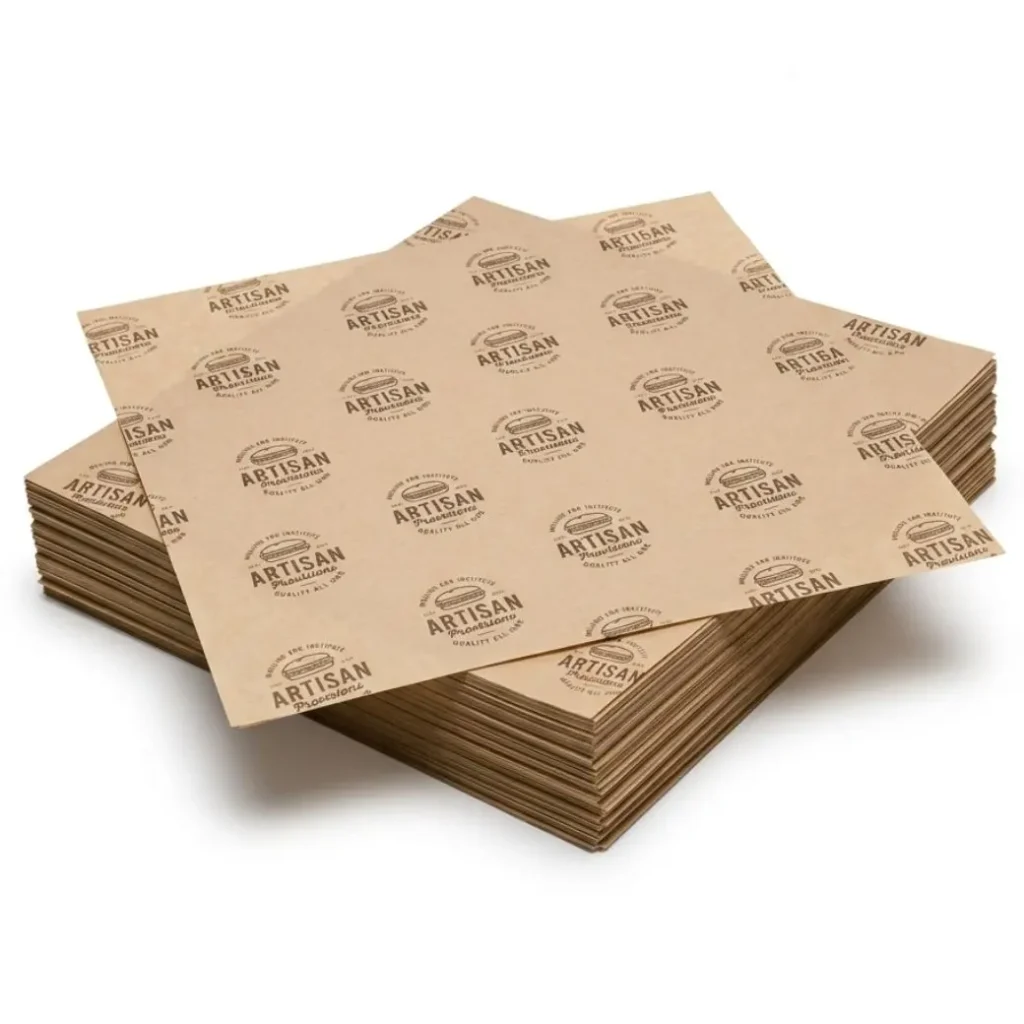
Brown deli paper skips the bleaching stage entirely. The fiber goes from pulp to finished sheet without chemical brightening. The natural colour variation in the wood fiber is visible in the finished paper – which is why brown kraft has a slight texture and warmth that white deli paper does not. That variation is not a defect. It is what unprocessed fiber looks like.
The bleaching process does not add anything to the paper. It removes the natural colour compounds in the wood fiber. White deli paper is not coated white – it is bleached to reveal the natural whiteness of the cellulose beneath the lignin. Understanding this matters when evaluating sustainability claims.
How White and Brown Deli Paper Print Differently
This is the section most suppliers skip. Print quality on custom deli paper is not just about the design. It is about the interaction between the ink, the surface and the visual outcome on a material that your customer holds in their hand.
Print quality on white deli paper
The bleached surface of white deli paper is uniform and low-porosity. Ink sits on the surface consistently across the full sheet. Full CMYK printing reproduces accurately a four-colour logo with multiple tones, gradients and fine typography prints with the same fidelity you see on screen. Pantone colour matching is precise. Light pastels and off-white tones in a logo render clearly against the white base.
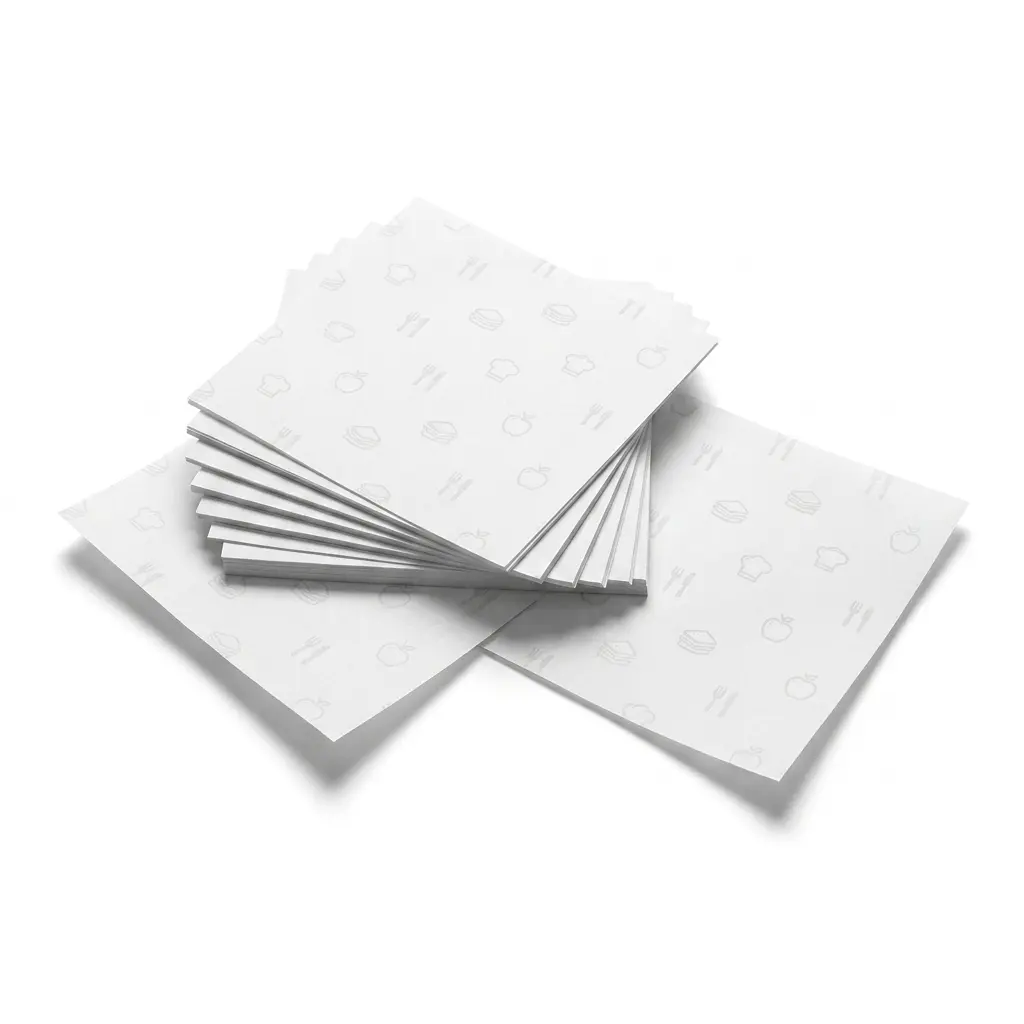
This is why white deli paper is the default for brands with complex logos, full-colour designs or strict brand style guides that require accurate colour reproduction across all materials. The surface does what it says it will do.
Print quality on brown deli paper
The unbleached surface of brown kraft has natural fibre variation. The porosity is slightly higher and less consistent than bleached white. For 1-colour and 2-colour logo print – a wordmark, a simple symbol, a text-based brand mark – that variation is invisible in the finished product. The logo prints clean and consistent. The difference between white and brown surfaces disappears when the ink is a strong, opaque colour sitting on a contrasting background.
Where the difference shows is in full CMYK designs with light colours, fine gradients or small-scale typography. The natural warm tone of unbleached kraft a mid-brown affects how lighter ink colours render. A light cream or off-white element in a logo becomes harder to distinguish from the background. A complex full-colour photograph or illustration loses accuracy because the base colour of the paper shifts the tonal range.
The practical guidance from customprintedpapers.com‘s print team: if the logo is a mark in 1 or 2 colours, brown kraft prints it clearly and consistently. If the design uses more than 3 colours, includes fine gradients or has small-scale text that needs to read at a distance, white gives more reliable results. When in doubt, request a print proof on both materials before approving a production run.
What Each Material Communicates Before the Customer Reads the Logo
Packaging materials carry meaning before anyone looks at the design. A customer picks up a wrapped sandwich and forms an impression of the business in the two seconds before they register what the logo says. That impression comes from the material itself its colour, its texture, its weight in the hand.
What white deli paper communicates?
Clean. Consistent. Professional. White deli paper signals that the operation takes presentation seriously without making a specific statement about the brand’s values or provenance. It is a neutral surface the design carries all the brand meaning. For a fast casual chain, a sandwich shop with a strong visual identity or any business where consistency across multiple locations matters, white is the correct choice. The surface does not compete with the brand it supports it.
What brown deli paper communicates
Natural. Unprocessed. Deliberate. Brown unbleached kraft carries associations that most customers recognise without being able to name – farmers markets, artisan food, local sourcing, food made by people who care about ingredients. Those associations exist because the material has been used by those businesses for long enough that the connection is cultural.
For a neighborhood deli that sources from local farms, a sandwich shop that charges a premium for quality ingredients, a butcher counter or a charcuterie operation, brown kraft packaging is not just a choice – it is part of the brand argument. The material says something specific about the business before the customer reads a word.
The risk is choosing brown kraft for the aesthetic without the substance to back it up. A fast food operation using brown kraft paper because it looks trendy creates a gap between what the packaging promises and what the business delivers. Customers notice that gap. The material works when it tells a true story about the brand. When it does not, it reads as a surface decision, and customers are better at detecting surface decisions than most food businesses realise.
The Sustainability Difference Between White and Brown Deli Paper
Both white and brown deli paper from customprintedpapers.com carry FSC Chain of Custody certification. The fiber sourcing is responsible in both cases – traceable from a responsibly managed forest through to the finished sheet. The sustainability difference between the two materials is not in where the fiber comes from. It is in what happens to the fiber during manufacturing and what happens to the paper after use.
Manufacturing Impact:
White deli paper requires a bleaching stage. ECF bleaching elemental chlorine free is the current industry standard. It uses chlorine dioxide rather than elemental chlorine and significantly reduces the formation of organochlorine compounds in the process effluent. TCF bleaching is totally chlorine free and uses hydrogen peroxide, ozone or other non-chlorine oxidants and produces no chlorinated compounds at all. Both are cleaner than historical bleaching processes but both add a chemical processing stage that brown kraft does not require.
Brown deli paper has no bleaching stage. The manufacturing process is shorter and involves fewer chemical inputs. No chlorine compounds, no optical brighteners, no additional processing between pulping and paper formation. That does not automatically make brown kraft more sustainable in every measure energy use, water use and transportation are all factors in the full lifecycle assessment. But the absence of a chemical processing stage is a documented and verifiable difference.
End of life
Both materials are recyclable in standard paper streams. The difference at end of life is compostability.
- White deli paper: recyclable in curbside paper streams. Not generally compostable the bleaching process and any optical brighteners used affect breakdown in composting environments.
- Brown unbleached kraft: recyclable and compostable. No synthetic chemical residues, no bleaching agents. Breaks down in commercial composting environments and in most home composting setups. This is the documented claim, not a marketing statement customprintedpapers.com supplies compostability documentation on request for brown kraft orders.
For B-Corp certified brands, brands with Scope 3 emission reporting requirements or brands that supply to retailers with documented packaging sustainability audits, brown kraft provides cleaner answers to supplier documentation requests. The absence of a bleaching stage and the compostability at end of life are both verifiable through customprintedpapers.com supplier documentation.
Which Food Businesses Order White and Which Order Brown
This is not a rule it is a pattern from customprintedpapers.com‘s wholesale accounts. Understanding the pattern helps clarify the decision.
White vs. Brown Kraft Deli Paper
Match your menu concept, brand identity, and operational style to the right paper base.
| White Deli Paper | Brown Kraft Deli Paper |
|---|---|
|
|
Some operations order both. A multi-location sandwich chain might use white for service wrapping and brown kraft for seasonal gift packaging or a specialty line that carries a premium positioning. Both formats use the same artwork file the order goes through custom printed papers as two separate SKUs from the same account.
White vs Brown Deli Paper – Full Comparison
Technical Specifications Comparison
Deep-dive technical performance matrix for custom food-wrap selection.
| Specification | White Deli Paper | Brown Deli Paper |
|---|---|---|
| Base material | Bleached kraft pulp | Unbleached kraft pulp |
| Surface | Uniform, low porosity | Natural, slight fibre variation |
| Bleaching process | ECF or TCF — no elemental chlorine | None — no bleaching stage |
| Full CMYK print | Excellent across all colours | Best for 1 to 2 colour logos |
| Pantone matching | Precise | Approximate on natural surface |
| Light colours and gradients | Reproduce accurately | Affected by natural surface tone |
| Recyclable | Yes | Yes |
| Compostable | No | Yes — home and commercial |
| FSC certified | Yes | Yes |
| FDA 21 CFR 176.170 | Compliant | Compliant |
| Optical brighteners | Some processes use them | None |
| Best brand type | Fast casual, consistent, multi-colour | Artisan, eco-first, 1 to 2 colour |
FDA 21 CFR 176.170 compliance applies to both materials. Both are safe for direct food contact with aqueous and fatty foods. This is not a differentiator between white and brown. It is a baseline requirement for any deli paper used in food service, and custom printed papers provides compliance documentation with every order regardless of material.
Can You Order Both White and Brown Deli Paper from Customprintedpapers.com
Yes. Both materials are available from the same minimum order quantity 50 sheets per material. Both use the same artwork submission process and the same digital proof stage. If you want to test both materials before committing to a production run, request a free sample pack of each from customprintedpapers.com. The sample shows you the surface quality, the print result and the material weight in your hand before you approve a production order.
For accounts ordering both materials, the same logo file works across both. The print team at customprintedpapers.com adjusts the print specification for each surface ensuring the logo reads correctly on the bleached white surface and the unbleached brown surface – without requiring a separate design file for each.
Questions About White vs Brown Deli Paper
Is brown deli paper food safe
Yes. Brown unbleached kraft deli paper meets FDA 21 CFR 176.170 standards for direct contact with aqueous and fatty foods – the same compliance standard as white deli paper. The absence of bleaching agents does not affect food safety compliance. customprintedpapers.com provides FDA compliance documentation with every order regardless of material.
Does brown deli paper cost more than white
At custom printed papers, white and brown kraft deli paper are priced at the same rate per sheet at equivalent order quantities. The bleaching stage in white paper manufacturing is a cost that manufacturers absorb – it does not translate to a premium for the buyer at the wholesale level. The decision between white and brown is a brand and operational decision, not a cost decision.
Can I switch from white to brown deli paper without changing my logo file
In most cases, yes. If the logo is a 1 or 2 colour mark, it transfers to brown kraft cleanly from the same artwork file. If the logo uses full CMYK with light colours or fine gradients, the customprintedpapers.com print team will review the file and advise whether any adjustment is needed for the brown surface before the order goes to press. This review happens during the digital proof stage at no additional cost.
Is brown kraft deli paper actually eco-friendly or just a marketing claim?
The specific claims that are documentable: FSC Chain of Custody certified fiber, no bleaching agents, no chlorine compounds, 100 percent recyclable in standard paper streams, compostable in commercial and home composting environments. customprintedpapers.com provides documentation for all of these on request. What cannot be claimed without a full lifecycle assessment is that brown kraft is categorically more sustainable than white in every environmental measure — energy and water use in the pulping stage, transportation distance and other factors affect the full picture. The documented claims are the ones that hold up in a supplier audit.
Which prints better – white or brown deli paper?
White deli paper prints better for complex, multi-colour designs with light tones and fine detail. Brown deli paper prints cleanly for 1 and 2 colour logo marks on a contrasting background. If the question is which gives the most accurate reproduction of a complex brand identity across all colour ranges – white. If the question is which gives a clean, sharp result for a simple logo mark while also communicating a natural or sustainable brand identity brown. Request a print proof on both from customprintedpapers.com before deciding.