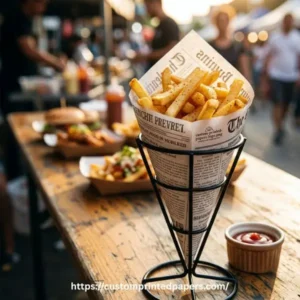
Custom Food Paper — Wholesale Printed Paper for Every Food Business in the USA
Custom food paper is food-grade paper printed with your restaurant logo, brand colors, or custom design using certified food-safe inks, then used to wrap, line, or serve food directly. It covers fourteen substrate types — from greaseproof deli sheets to silicone-coated parchment and PE-lined freezer paper — each engineered for a specific food type, temperature range, and grease load. Every substrate we manufacture at Custom Printed Papers meets FDA 21 CFR Part 176 food-contact compliance, ships free across all 50 states, and arrives within 4 to 6 business days.
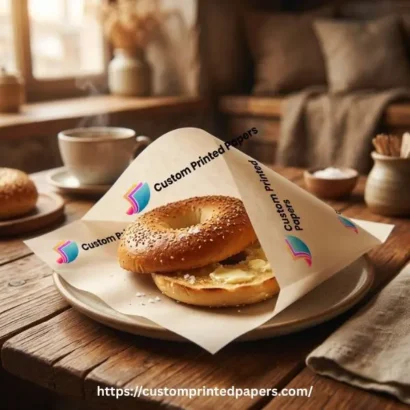
The wrapper a customer holds before eating is also the image they photograph and share. It is your brand's physical handshake. We manufacture custom printed food paper in fourteen substrate types — each substrate selected, tested, and qualified for direct food contact so your kitchen runs clean, your compliance documentation is airtight, and your brand identity lands on every single order.
14 Types of Custom Food Paper: Material Comparison and Substrate Selection Guide
Not all food paper is the same material. A greaseproof sheet protecting a smash burger operates under completely different chemical and mechanical demands than silicone-coated parchment lining a commercial deck oven at 450°F. Use the specification matrix below to match each substrate to your menu, your kitchen temperature, and your operational throughput. Every paper type listed is available with full custom printing in your brand colors.
All substrates comply with FDA 21 CFR 176.170 (aqueous & fatty foods) and/or 176.180 (dry foods). TAPPI Kit Levels tested per TAPPI T559 cm-12 standard. Temperature thresholds are continuous-use maximums.
French fries, chicken tenders, deep-fried sides, food boats
Advanced oil-bleed defense barrier
Kit 6–8
220°F (104°C)
Custom Hot Paper
Hot takeout, paninis, thermal-retention wrapping
Heat-reflective foil-laminated paper barrier
Kit 4–6
300°F (149°C)
Custom Fish & Chip Paper
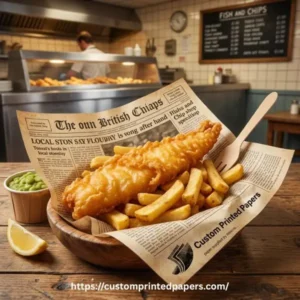
Seafood wrapping, high-acid oil fast food service
Heavy-duty greaseproof kraft
Kit 4–6
200°F (93°C)
Custom Cheese Paper
Artisan cheese aging, premium deli counter storage
Breathable, moisture-regulated two-ply construction
Breathable (no grease rating)
Refrigerator temperatures only
What the TAPPI Kit Level Actually Tells You — And Why It Matters for Your Menu
The TAPPI T559 Kit Test is the food packaging industry's accepted standard for measuring grease resistance in paper and paperboard. The test applies twelve numbered reagent solutions — each a progressively more aggressive mixture of castor oil, toluene, and heptane — to the paper surface. The highest-numbered solution that sits on the surface for fifteen seconds without darkening or penetrating the sheet becomes the paper's Kit Level score, rated 1 through 12.
Here is what that means at the kitchen level: a low-fat croissant in a display case holds fine on Kit 3 paper. A hot smash burger dripping bacon fat needs Kit 5 or higher. A serving of deep-fried chicken tenders held under a heat lamp for twenty minutes needs Kit 7 or above or you will see grease bleed-through before the food reaches the customer's table. When a supplier calls their paper "greaseproof" without citing a TAPPI Kit Level, that claim carries no measurable meaning. Every substrate we ship lists its verified TAPPI Kit score on the product Technical Data Sheet.
Quick Kit Level Reference by Food Type
Kit 2–3: Dry bread, plain pastries, cookies, cold deli display
Kit 3–4: Sandwiches with light condiments, wrapped burritos, butter-based pastries
Kit 5–6: Burgers with standard condiment load, sautéed items, baked proteins
Kit 6–8: Deep-fried foods, pizza, anything with animal fat or vegetable oil at serving temperature
Kit 8–12: High-acid oily foods, extended hold times, heat-lamp service situations
PFAS-Free Food Paper: What the 2024–2026 Regulatory Changes Mean for Your Restaurant
For decades, grease resistance in food packaging paper was achieved using fluorochemical agents — a family of compounds now classified as PFAS (per- and polyfluoroalkyl substances), commonly called "forever chemicals." As of February 2024, the FDA confirmed that PFAS-based grease-proofing agents for paper and paperboard food packaging are no longer sold by US manufacturers, completing a voluntary market phase-out that eliminates the primary dietary PFAS exposure route from authorized food-contact packaging.
State-level action has moved faster still. As of 2026, mandatory bans on intentionally added PFAS in food packaging are active in New York (since December 2022), Vermont (July 2023), Washington (February 2023), Minnesota (January 2024), Maryland (January 2024), Connecticut (December 2023), Oregon (January 2025), Rhode Island (January 2025), Illinois (January 2026), and multiple additional states with bans phasing in through 2027. If your restaurant operates in any of these states — or ships product across state lines — PFAS-free documentation is not optional.
Every custom food paper substrate manufactured by Custom Printed Papers is 100% PFAS-free and fluorine-free. We achieve grease resistance through mechanical supercalendering, food-grade silicone coatings, plant-based wax barriers, and polyethylene lamination — all legally permitted non-fluorinated alternatives that perform to the same TAPPI Kit Level thresholds without the regulatory exposure.
FDA 21 CFR 176.170 and 176.180 — Plain-Language Compliance Explained
Two sections of the US Code of Federal Regulations govern paper and paperboard in direct food contact. 21 CFR Part 176.170 covers paper and paperboard in contact with aqueous and fatty foods — the regulation that applies to every greasy, moist, or acidic food item from a burger wrapper to a fried chicken liner. 21 CFR Part 176.180 covers contact with dry foods, including bread bags, dry pastry liners, and cracker packaging.
Both regulations define the specific substances permitted in the food-contact surface layer of the paper — including sizing agents, coatings, and adhesives. They also set extractives limitations (the threshold for how much material can migrate into food under test conditions). Critically, FDA compliance is condition-specific: a paper certified compliant under 176.180 for dry food contact is not automatically suitable for a greasy food application. The conditions of use — food type, temperature, contact time — determine which part applies. All substrates we supply include a Supplier Declaration of Compliance referencing the applicable CFR section and intended use conditions, so your audit documentation is ready before your order arrives.
Which Custom Food Paper Is Right for Your Business Type?
The right paper substrate depends on what you serve, how you serve it, and how fast your kitchen moves. Here is how different food operations match to substrates.
Restaurants, Diners & QSR Chains
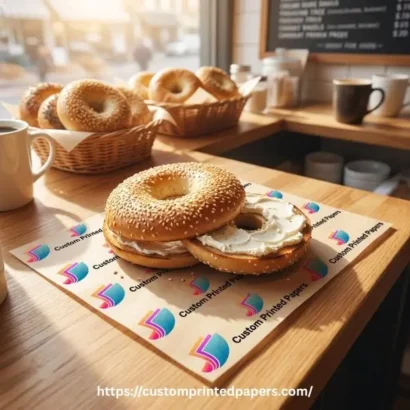
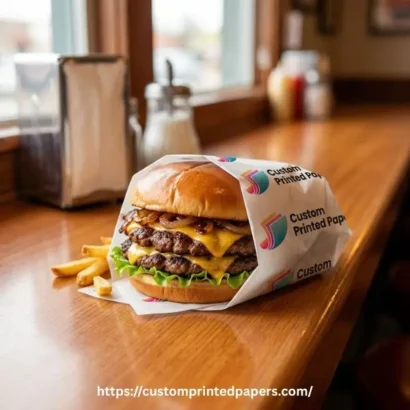
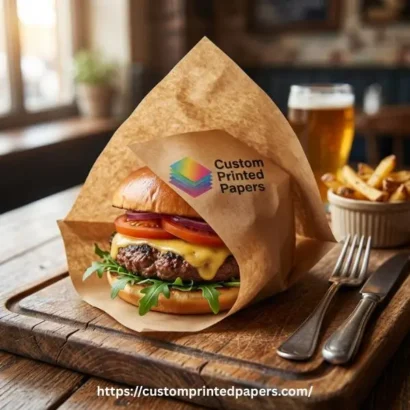
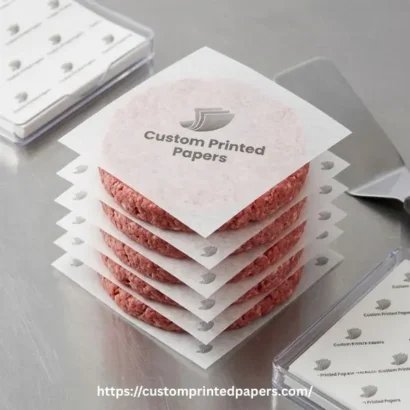
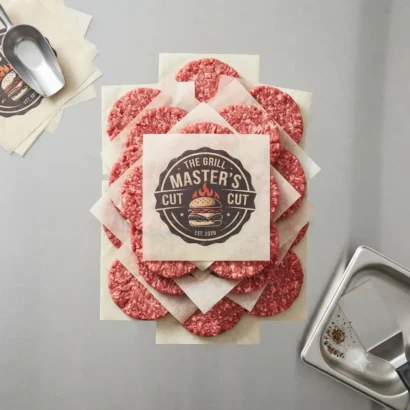
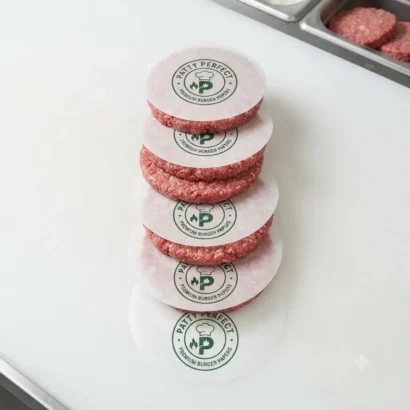
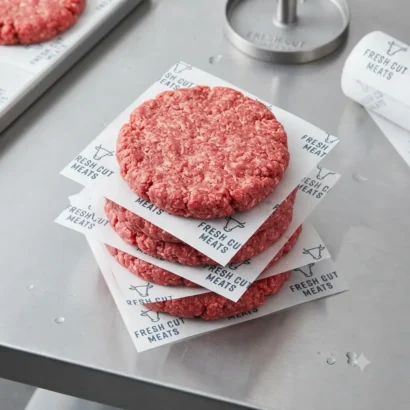
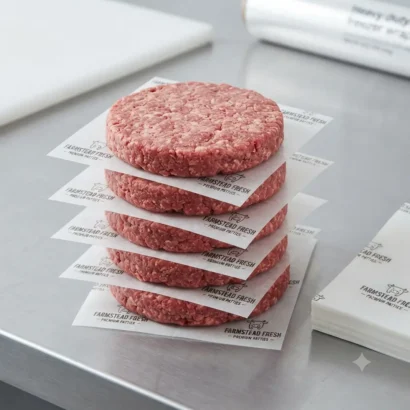
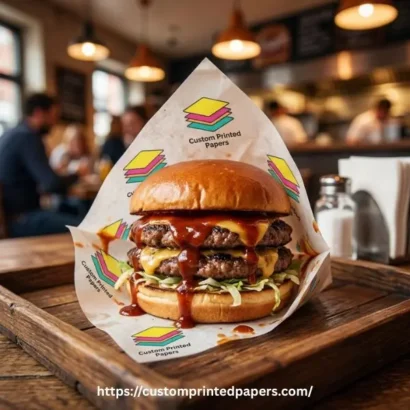
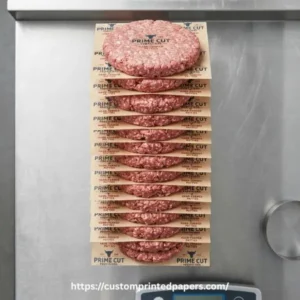
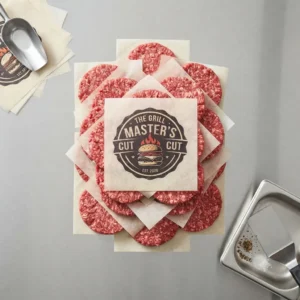
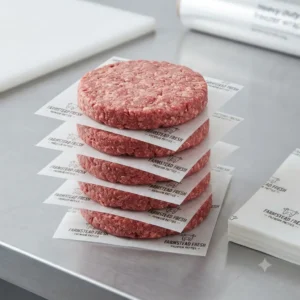
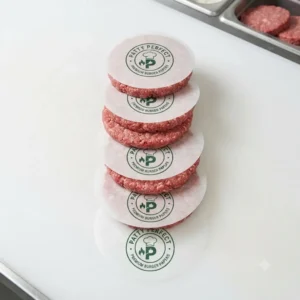
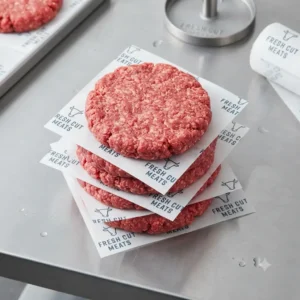
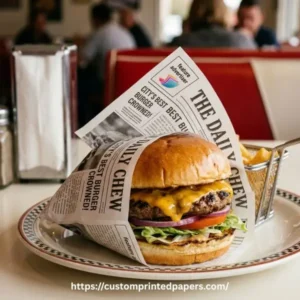
Burger paper, deli sheets, and hot paper are your core lineup. High-volume kitchens benefit from pre-cut sheet formats in dispenser-ready packs. Custom printed logo wraps reinforce brand identity at every table and takeout window.
Bakeries, Patisseries & Cafes
Parchment paper for oven liners and sheet pans, butter paper for patisserie wrapping, and glassine for display cases. Printed parchment sheets double as proof that your baking standards match your brand presentation.
BBQ Smokehouses & Pit Operations
Uncoated pink butcher paper lets brisket bark form properly while the paper breathes — a technically critical distinction from waxed paper, which traps steam and softens the bark. Custom printed pink butcher paper branded with your smokehouse identity is a social media staple.
Delis, Sandwich Shops & Charcuterie Bars
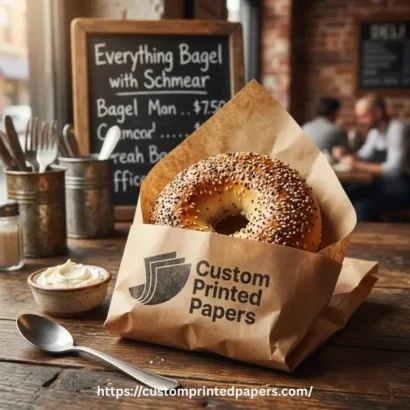
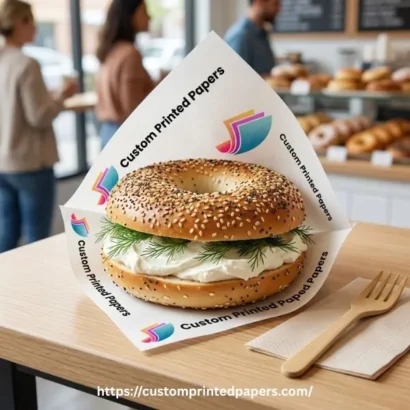
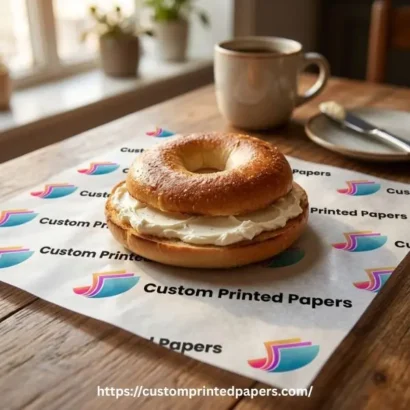
Deli paper in white or brown kraft, waxed deli sheets for moisture-sensitive cold cuts, and cheese paper for artisan counter storage. Custom printed deli paper with your shop name and logo turns every wrapped order into a branded moment.
Food Trucks & Pop-Up Kitchens
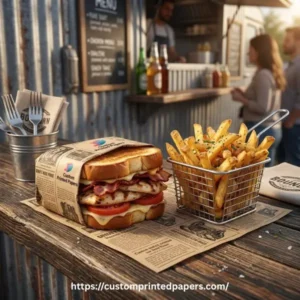
Compact roll formats and pre-cut sheet packs that fit tight prep counters. Greaseproof paper and fry paper handle high-fat street food applications. Custom printing gives mobile operations the same professional visual identity as a brick-and-mortar location.
Pizza Operations & Delivery Concepts
Heavy-duty pizza liners rated Kit 6–8 prevent oil strike-through on corrugated boxes during delivery. Custom printed pizza liners with your logo replace generic white squares and hold their print clarity under the grease load of a full cheese pizza.
Flexographic vs. Digital Printing for Custom Food Paper: Which Method Applies to Your Order?
We use two print methods depending on your order volume, design complexity, and lead time requirements.
Flexographic printing is the industry standard for high-volume food paper production. Flexible photopolymer plates transfer food-safe water-based inks at high speed onto paper rolls. Setup requires plate-making, which carries an upfront plate cost but delivers the lowest per-unit price at scale. Flexo is best for: orders above 5,000 sheets or 10+ rolls, simple to moderately complex designs, solid spot colors, and repeat patterns across large runs.
Digital printing eliminates plates entirely — artwork transfers directly from your digital file to the paper substrate. There is no plate cost, no minimum color setup fee, and no long makeready time. Digital is best for: short-run orders starting from 50 sheets, full-color photographic designs, variable-data printing where multiple versions of a design run in the same order, and proof quantities before committing to a full flexo run.
When you submit your quote request, our pre-press team recommends the right print method for your volume and design. You never need to choose blindly.
Order Custom Printed Food Paper for Your Food Business
Upload your logo or brand assets in PDF, AI, EPS, or PNG format (300 DPI minimum for print-ready output) using the quote form on this page. Our pre-press team reviews every file and delivers a free digital proof within one business day. Free shipping on all orders across the United States. Minimum order starts at 50 sheets. No hidden setup fees on digital runs.
How to Order Custom Printed Food Paper — Our 6-Step Process
Ordering custom printed food paper from Custom Printed Papers takes six steps: choose your paper substrate, upload your artwork, select your finish and add-ons, review and approve a digital proof, enter production, then receive free-shipped delivery in 4 to 6 business days. Here is exactly what happens at each stage.
01
Choose Your Paper Substrate
Select the food paper substrate that matches your menu and kitchen conditions. Use the material comparison table in the Description tab to match substrate type to your food's grease load, serving temperature, and format requirements — sheets, rolls, or custom-cut sizes. If you are unsure, our team recommends the right substrate based on your menu items and operational volume when you submit your quote request.
02
Upload Your Artwork
Upload your logo, brand pattern, or complete artwork file using the quote form. We accept PDF, AI, EPS, and PNG formats at 300 DPI minimum resolution. If your file does not meet print-ready specifications, our pre-press designers will contact you directly and help you prepare the artwork at no charge. You do not need to hire a designer before placing your order.
03
Select Your Finish and Add-Ons
Choose from protective finishes including gloss aqueous coating, matte coating, soft-touch lamination, or uncoated natural kraft. Premium visual add-ons include metallic foil stamping, spot UV, embossing, and debossing. For food paper substrates where the paper contacts food directly, finish options are selected for the non-food-contact outer print surface only — the food-contact side always remains food-grade compliant.
04
Review and Approve Your Digital Proof
Within one business day of receiving your artwork, our pre-press team delivers a high-resolution digital proof showing your design on the selected substrate at actual print dimensions. The proof shows color breakdown, bleed zones, safe areas, and any pre-press corrections our team has made. Review the proof carefully — check that your logo, brand colors, and text all appear exactly as intended. Request revisions at no charge until you are 100% satisfied. Production only starts after you send written approval.
05
Production and Quality Control
Once you approve the proof, your order enters our production facility. We print using food-safe, water-based inks on your selected substrate using either flexographic presses for high-volume runs or digital presses for short runs and complex color designs. Every production batch goes through in-line quality checks for color consistency, print registration accuracy, and substrate integrity. We do not ship batches with visible print defects, color variance, or substrate damage.
06
Free Shipping and Delivery
All orders ship free across all 50 US states with a 50-sheet minimum order value threshold. Standard production and delivery runs 4 to 6 business days from proof approval. Expedited production options are available for time-sensitive orders — contact our team when submitting your quote request to confirm availability. As soon as your order ships, you receive a tracking number by email so you can monitor delivery status until your branded food paper reaches your kitchen.
Frequently Asked Questions About Ordering
What is the minimum order quantity for custom printed food paper?
Our minimum order starts at 50 sheets or 1 roll depending on the substrate. Digital printing runs support low minimums without plate costs. Flexographic runs become more cost-effective at 5,000 sheets and above. Contact us for volume pricing at any quantity level.
How long does it take to receive custom printed food paper?
Standard turnaround is 4 to 6 business days from proof approval to delivery at your door. Expedited options are available. Production time does not begin until you approve your digital proof, so submitting print-ready artwork speeds up the overall timeline.
Is there a charge for the digital proof?
No. Digital proofs are free and delivered within one business day. Unlimited revisions are also free until you are satisfied with the design before approving production.
Can I order multiple substrate types in a single order?
Yes. You can combine different paper types — for example, deli paper sheets and butcher paper rolls — in a single order. Each substrate type ships with its own product specifications and compliance documentation.
Artwork Guidelines for Custom Printed Food Paper
Submitting print-ready artwork correctly the first time eliminates back-and-forth delays and gets your order into production faster. These guidelines cover every technical specification our pre-press team checks before your file goes to press. If any element does not meet specification, we contact you directly and offer to fix it at no charge — but following these guidelines from the start gives you the fastest route to your approved proof.
Accepted File Formats
Preferred: PDF/X-1a or PDF/X-4 with embedded fonts and CMYK color mode. These formats lock in your fonts, colors, and bleed settings and give us the cleanest file to work from.
Also accepted: AI (Adobe Illustrator, with fonts outlined), EPS with embedded images, high-resolution PNG at 300 DPI or higher at final print size.
Not accepted for production: Word documents, PowerPoint files, JPEG files under 150 DPI, screenshots, or low-resolution social media exports. These will require redevelopment before production can start.
Resolution Requirements
Minimum 300 DPI (dots per inch) at actual final print size. This is the universal threshold for sharp print output. An image that looks sharp on screen at 72 DPI will print blurry — screen resolution and print resolution are not the same thing.
Vector files (PDF, AI, EPS built entirely from vector artwork) are resolution-independent and are always preferred for logos, text, and geometric brand marks.
Raster images (photographs, textured backgrounds) embedded in your file must be 300 DPI at the intended output size. Scaling a 72 DPI image up in layout software does not increase its resolution — it degrades print sharpness.
Color Mode: CMYK, Not RGB
All artwork must be set to CMYK color mode before submission. RGB is a screen color model used by monitors and phones. Printing uses CMYK (Cyan, Magenta, Yellow, Black) inks. RGB files submitted for print undergo a color conversion that often shifts brand colors unpredictably — particularly bright blues, vivid reds, and neon greens.
If you have a specific Pantone (PMS) color that is critical to your brand, provide the PMS reference number alongside your CMYK equivalent. We match to CMYK values in our printing process.
Convert RGB files to CMYK in Adobe Illustrator (Edit → Color Mode → CMYK) or Photoshop (Image → Mode → CMYK) before saving your final file.
Bleed, Trim, and Safe Zone
Bleed: Extend any background color or design element that runs to the edge of the paper by 3mm (0.125 inches) beyond the trim line on all sides. Bleed prevents white paper edges from appearing if the cutter runs 1–2mm off the trim mark during production — a normal mechanical tolerance.
Safe zone: Keep all critical content — your logo, address, phone number, and any text you need to read clearly — at least 5mm (0.2 inches) inside the trim line. Content placed too close to the edge risks being cut off.
Trim line: This is the final cut size of your paper. Your artwork document size should match the ordered sheet or roll dimensions exactly, with the 3mm bleed added to all sides.
Fonts and Typography
Outline all fonts before saving your final file. This converts text to vector shapes, so the exact appearance of your typography is preserved even if our production system does not have the same font installed. In Adobe Illustrator: Select All → Type → Create Outlines.
Minimum text size for readability: 6pt for simple sans-serif typefaces. Fine serif fonts, scripts, or condensed typefaces may need 8pt or larger to hold their details cleanly in print.
Reverse text (white or light text on a dark background) needs sufficient contrast and adequate point size — fine reversed text on textured or kraft backgrounds can fill in during printing and become unreadable.
Repeating Patterns for Rolls and Large Sheets
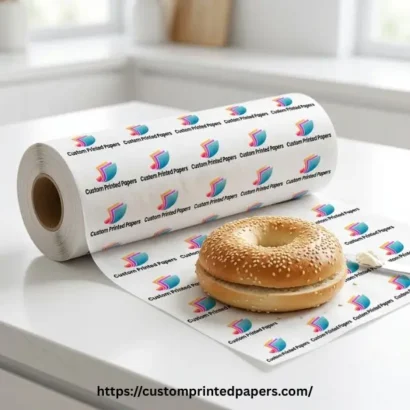
For roll-format food paper with repeating patterns — logo stamps, tiled brand motifs, text repeats — the pattern tile must be designed so it seamlessly connects at the left/right and top/bottom edges without visible gaps or misaligned joints.
Specify your tile repeat dimensions (the exact size of one full pattern repeat) in your artwork file or in your quote request notes. Our pre-press team aligns the repeat to your roll width and confirms the tile registration before going to press.
Diagonal or brick-offset patterns need additional care — supply the full tile with clear notations on repeat direction. When in doubt, share a mockup showing how the pattern should appear across a 12-inch width section of your roll.
Common Artwork Mistakes to Avoid
RGB color mode — always convert to CMYK before submitting
Raster logos saved as JPEG at 72 DPI — always export at 300+ DPI or use vector originals
Text or logo too close to the trim edge — maintain the 5mm safe zone
Missing bleed — background color or patterns must extend 3mm past the trim line
Fonts not outlined — pre-press systems may substitute a different font if yours is not embedded
Using neon or fluorescent RGB colors expecting them to reproduce as-is in CMYK printing — those colors are outside the CMYK gamut and will shift
Need Design Help? We Can Build Your Artwork
If you have a logo but no print-ready artwork, our in-house design team can build a print-ready layout for your food paper based on your brand assets. Submit your logo file and brand color references (Pantone, hex, or CMYK values) in your quote request and note that you need design support.
We will create a layout optimized for the substrate you selected, accounting for the food-contact surface, print area, bleed, and safe zones — then deliver a proof for your review before any production begins.
Custom Food Paper Materials — Substrate Types, GSM Ranges, and What Each One Does
Custom food paper is manufactured from one of several paper substrate types — each with a distinct fiber composition, coating or treatment, and performance profile. The most common base materials are virgin kraft pulp, bleached chemical wood pulp, supercalendered mechanical pulp, silicone-coated parchment, polyethylene-laminated freezer paper, and two-ply breathable cheese paper. Selecting the right material is a functional decision, not an aesthetic one. Here is what you need to know about each substrate type we use.
Brown Kraft Paper
Composition: Long-fiber virgin or recycled cellulose pulp, unbleached. The natural lignin is retained, producing the characteristic brown color.
GSM range: 30–90 GSM depending on application (deli sheets at lower end; butcher paper and table covers at higher end).
Properties: High tensile strength and tear resistance. Breathable — does not trap steam. Naturally compostable. Accepts printing well on the smooth side. No chemical greaseproofing treatment.
Best for: Butcher paper, sandwich wraps, basket liners, table runner rolls, deli wrapping with low-fat food items. Brown kraft's breathability makes it the only correct choice for BBQ brisket wrapping — trapping steam softens the bark.
White Bleached Kraft Paper
Composition: Bleached chemical wood pulp (kraft process). The bleaching removes lignin and produces a bright white surface that accepts full-color CMYK printing with maximum color accuracy.
GSM range: 35–80 GSM.
Properties: Superior print surface for vibrant logo reproduction. FDA 21 CFR 176.170 and 176.180 compliant. FSC-certified grades available. Uncoated grades are breathable; waxed grades add a moisture barrier.
Best for: Custom deli paper, sandwich wrap sheets, white butcher paper, custom waxed deli sheets. The white surface maximizes print vibrancy — the right choice when your logo includes bright colors or fine type detail.
Greaseproof Paper (Supercalendered)
Composition: Highly beaten bleached chemical pulp processed through supercalendering — a high-pressure polishing process that compresses the fiber structure, dramatically reducing porosity and eliminating pathways for oil to penetrate the sheet.
GSM range: 35–60 GSM. TAPPI Kit Level: 5–8 without fluorochemicals.
Properties: PFAS-free grease resistance achieved through physical fiber treatment — no fluorochemical agents required. Semi-transparent appearance at lower GSM. Accepts print on the coated side. 100% FDA 21 CFR 176.170 compliant.
Best for: Burger wrap sheets, fried food liners, greasy basket paper, pizza liners. The right choice for any food application where grease penetration is the primary failure mode.
Silicone-Coated Parchment Paper
Composition: Bleached kraft or glassine base sheet coated on one or both sides with food-grade silicone. The silicone forms a non-stick, heat-resistant surface that releases baked goods cleanly and handles temperatures other food papers cannot.
GSM range: 40–90 GSM base sheet weight. Max temperature: 450°F (232°C) for continuous use — the highest of any food paper substrate in our lineup.
Properties: Non-stick surface eliminates the need for spraying sheet pans with oil or cooking spray. Moisture and grease barrier. Reusable in commercial baking settings for multiple oven cycles. FDA compliant for direct food contact at baking temperatures.
Best for: Commercial baking — cookie sheets, cake pans, sheet pan cooking, oven liner rolls for deck ovens. Note: custom printing on parchment applies to the non-silicone outer surface; the food-contact silicone side is unprinted.
Wax Paper (Paraffin and Soy Wax)
Composition: Bleached kraft base sheet coated on one or both sides with food-grade paraffin wax or plant-based soy wax. The wax coating provides a moisture barrier and a low-level grease barrier.
GSM range: 35–60 GSM base sheet. Important limitation: Not oven-safe. Wax coating begins to melt above approximately 160–170°F (71–77°C). Do not use wax paper in ovens, under heat lamps for extended periods, or with very hot foods directly from a fryer.
Properties: Provides a moisture and freshness barrier for cold applications. Prevents food from sticking to deli case surfaces. The wax surface affects ink adhesion — we use wax-compatible food-safe inks for custom printed wax paper orders.
Best for: Cold deli display, candy and confectionery wrapping, bakery case liners, pastry interleaving, cold sandwich wrapping. Not suitable for hot food service or any heated application.
Freezer Paper (PE-Coated)
Composition: Bleached or unbleached kraft paper coated on one side with a thin layer of food-grade polyethylene (PE). The PE side faces the food and provides a moisture-vapor barrier that prevents freezer burn. The uncoated paper side accepts full-color custom printing.
GSM range: 40–80 GSM total (including PE coating). Important limitation: Not oven-safe. The PE coating melts under heat and is designed exclusively for freezer and cold storage applications.
Properties: Superior moisture-vapor transmission rate (MVTR) barrier for extended freezer storage. The PE coating surface can be heat-sealed using commercial bag sealers for portion-pack applications. FDA compliant for food contact.
Best for: Butcher shop freezer wrapping, primal meat portioning, frozen meal prep, raw protein storage. Custom printing on the kraft side lets butchers, meal-prep brands, and meat processors brand their frozen product clearly.
Cheese Paper (Two-Ply Breathable)
Composition: A two-ply construction — an outer layer of printed paper bonded to an inner layer of polyethylene (PE) microperforated film. The microperforation pattern allows the paper to breathe while the PE inner layer prevents excessive moisture loss and protects the cheese rind.
Key distinction: This is the only substrate in our lineup where breathability, not grease resistance, is the performance metric. Cheese paper is not rated on the TAPPI Kit Scale — it is rated on moisture vapor transmission and breathability properties instead.
Properties: Maintains the correct humidity and gas exchange environment for aging and storing artisan cheeses. Prevents the cheese rind from drying out while also preventing condensation buildup that promotes unwanted mold growth. Refrigerator temperatures only.
Best for: Artisan cheese shops, charcuterie counters, specialty food retailers, cheese aging programs. Custom printed outer surface lets cheese mongers brand each wrapped wedge with name, origin, aging notes, and flavor description.
FSC-Certified and Sustainable Sourcing
Our paper substrates are sourced from FSC-certified (Forest Stewardship Council) forestry operations. FSC certification means the forest source meets independent third-party standards for responsible forest management — protecting biodiversity, workers' rights, and the rights of indigenous communities alongside timber production.
All food-safe inks used in our printing process are water-based, non-toxic, and free of heavy metals. Water-based inks produce significantly lower VOC emissions than solvent-based inks during production and are compatible with most paper recycling streams.
Uncoated kraft grades (brown and white kraft, uncoated greaseproof) are curbside-recyclable and industrially compostable where food contamination levels are within acceptable thresholds. Wax-coated and PE-coated grades should be disposed according to your local facility guidelines for composite materials.
Protective Coatings for Custom Printed Food Paper — Gloss, Matte, Soft-Touch, and Aqueous Options
Coatings apply to the printed outer surface of food paper — they protect ink from scuffing, moisture, and handling, and they change the visual and tactile character of your packaging. Coatings are not applied to the food-contact surface. Here is what each coating option does, when to use it, and what it feels and looks like in practice.
Gloss Aqueous Coating
What it does: A water-based liquid coating applied inline during printing. It creates a shiny, reflective surface that makes CMYK colors appear more vivid and saturated. Light bounces off the surface, producing a visual "pop" that draws attention.
Practical benefits: Protects printed ink from surface scuffing and moisture exposure during handling and packaging. Fast-drying. Compatible with most food paper substrates.
Visual result: Bright and premium. Colors look bold. The surface reflects overhead lighting — a positive in retail display contexts.
Best for: Deli paper, burger wrap sheets, pizza liners, and any application where color vibrancy and a polished brand presentation are the priority. The most popular coating choice for food service operations.
Matte Aqueous Coating
What it does: A water-based non-reflective coating that diffuses light instead of reflecting it. The result is a flat, low-sheen surface that projects sophistication and restraint rather than bold commercial energy.
Practical benefits: Eliminates glare, which makes the printed surface easier to read under direct overhead lighting (useful in bakery display cases and deli counters). Reduces fingerprint visibility compared to gloss — a significant advantage for paper handled frequently.
Visual result: Understated, premium, editorial. Brand colors print slightly less saturated than on gloss, but text and fine details appear crisp and refined. The right choice for premium, artisan, and independent brand identities.
Best for: Artisan bakery paper, patisserie wrapping, specialty deli paper, cheese paper outer surface, and upmarket food brands positioning on quality rather than value.
Soft-Touch Lamination
What it does: A thin plastic film laminated to the printed outer surface with a velvet-like texture coating. When you touch soft-touch lamination, it feels almost rubberized — smooth and slightly grippy, distinctly different from standard paper.
Practical benefits: Maximum scuff resistance of all coating options. Protects ink during high-contact handling. Adds structural rigidity to the paper, reducing tearing. Prevents fingerprints from showing on dark printed surfaces.
Visual result: Luxurious. The texture creates a perceived quality elevation — customers feel the difference before they see the food inside. Colors appear rich and slightly deepened compared to the same design on uncoated paper.
Best for: Premium restaurant wrapping paper, high-end bakery packaging, boutique food brands, any application where the tactile experience of unboxing or unwrapping is part of the brand strategy.
Full-Surface UV Gloss Coating
What it does: A UV-cured liquid varnish applied to the entire print surface and hardened instantly under ultraviolet light. UV gloss produces a harder, more durable surface than aqueous gloss coating, with more intense reflectivity.
Practical benefits: Superior resistance to scratching and abrasion compared to aqueous coatings. Faster through-put — UV curing is instantaneous, with no dry time required. Produces the highest-gloss finish available in our lineup.
Visual result: High-shine, mirror-like surface. Maximum color saturation. The most premium visual presentation available for flat printed food paper.
Best for: High-end restaurant groups, franchise packaging with premium positioning, gourmet food brands that treat every touchpoint as a brand expression. Available on select substrates — confirm availability when submitting your quote request.
Coating Comparison: Which Finish Is Right for Your Brand?
Coating Type
Visual Appearance
Tactile Feel
Fingerprint Resistance
Best Brand Positioning
Gloss Aqueous
Shiny, vivid, reflective
Smooth, slightly slick
Moderate
QSR, fast-casual, value-forward, high-volume
Matte Aqueous
Flat, non-reflective, subdued
Smooth, muted
Good
Artisan, independent, premium-casual
Soft-Touch Lamination
Low-sheen, rich depth
Velvety, rubberized grip
Excellent
Fine dining, boutique, luxury food brands
Full UV Gloss
Mirror-like, intense shine
Hard, glass-like
Moderate
Premium franchise, high-end casual, gourmet
Uncoated
Natural paper texture, muted colors
Paper grain, tactile
Low
Eco, sustainable, rustic, farmers market
Coatings apply to the non-food-contact printed outer surface only. The food-contact surface of all substrates remains uncoated and food-grade compliant per FDA 21 CFR Part 176 standards.
Special Finishes for Custom Food Paper — Foil, Spot UV, Embossing, and Debossing
Special finishes go beyond standard protective coatings to add visual drama, tactile differentiation, and premium brand signals to your custom printed food paper. They are applied after the base print run as post-press production steps. Each finish has specific substrate compatibility requirements — not all finishes work on all food paper types. Here is a complete breakdown of what each finish does, what it looks like, and which food paper applications it suits.
Metallic Foil Stamping
What it does: A heated metal die presses a thin metallic foil film onto the paper surface, leaving a precisely shaped metallic impression. The result is a mirror-like metallic finish that catches light from any angle and cannot be replicated by standard CMYK ink printing.
Available foil colors: Gold, silver, rose gold, copper, black, holographic rainbow, and custom color foil on request.
Best used for: Logo marks, brand initials, border details, product name typography. Foil stamping draws the eye immediately — it works best as an accent, not as a full-surface treatment. A gold-foiled logo on a matte kraft deli sheet communicates luxury at zero compromise to the food experience.
Substrate compatibility: Works best on bleached kraft, white deli paper, and coated outer surfaces. Requires sufficient paper weight (minimum 45 GSM base) for the die pressure to register cleanly. Confirm availability for your selected substrate when requesting a quote.
Spot UV Varnish
What it does: A UV-cured gloss varnish applied selectively to specific design areas — your logo, a brand pattern, a product name — rather than the entire surface. The contrast between the high-gloss UV-coated element and the surrounding matte or uncoated surface creates a striking visual and tactile effect.
Visual impact: The spot UV element appears to float above the surrounding paper surface. In direct light, the coated element shines while the background remains flat. Under indirect light, the effect is subtle — a sheen that rewards close inspection.
Best combination: Spot UV applied over a matte base coat produces the maximum contrast between gloss and flat surfaces — the premium packaging technique used by many luxury food brands. Spot UV over gloss creates a subtler tonal shift.
Best for: Logo highlighting on deli paper, bakery wrapping paper, sandwich wrap sheets, and burger paper orders where brand identity is central to the customer experience. Effective on medium-to-heavyweight substrates (40 GSM and above).
Embossing (Raised Relief)
What it does: A matched set of male and female metal dies presses the paper between them under pressure, physically raising a design element — your logo, a border, a texture pattern — above the flat paper surface. The raised element casts a subtle shadow and can be felt by touch with a fingertip.
Blind embossing vs. registered embossing: Blind embossing raises an unprinted element — the dimensional effect alone creates the brand impression without any ink color. Registered embossing aligns the raised element precisely over a printed design, creating a multi-layer dimensional effect.
What it communicates: Premium craftsmanship. Embossing is the packaging technique that signals to a customer, before they taste anything, that what is inside was made with care. It is the right choice for patisseries, artisan bakeries, and restaurants building a reputation on quality and presentation.
Substrate requirement: Minimum 50 GSM base paper weight for clean emboss definition. Heavier substrates (65–90 GSM) produce the sharpest relief. Not recommended for very thin greaseproof papers under 40 GSM — the mechanical pressure can damage the substrate's grease barrier treatment.
Debossing (Pressed Relief)
What it does: The same die-pressing technique as embossing, but in reverse — the design element is pressed into the paper surface rather than raised above it. The result is a recessed impression, like a brand stamp pressed into leather or wax.
Visual result: More understated than embossing. The recessed element sits in shadow rather than catching light — it rewards close inspection and touch rather than grabbing attention from a distance. When combined with a matte or soft-touch coating, debossing creates a monochromatic, architectural brand expression.
Foil + deboss combination: Applying metallic foil to a debossed element produces one of the most refined premium packaging effects available — the foil fills the recessed impression, creating a tactile metallic brand mark.
Best for: Upmarket deli paper, luxury bakery wrapping paper, restaurant branding where the brand mark itself is the centerpiece of the packaging design. The preferred finish for brands inspired by heritage, craft, and editorial aesthetics.
Combining Finishes for Maximum Impact
Special finishes work best in deliberate combinations. Here are four high-impact combinations used by premium food brands on their custom printed paper:
Matte Base + Gold Foil Stamp
The most popular premium food paper combination. The flat matte surface makes the metallic foil logo appear to float. Instantly communicates premium quality in any food category.
Matte Base + Spot UV Logo
The gloss-on-matte contrast creates a sophisticated tonal effect. The logo catches light while the background reads flat — subtle, premium, tactilely engaging.
Soft-Touch + Embossed Logo
The velvet soft-touch surface and the raised embossed brand mark create a purely tactile brand experience — impressive before the food is visible. Used by high-end patisseries and fine dining venues.
Gloss Base + Holographic Foil
The holographic foil shifts colors as light angle changes — high-energy and attention-grabbing. Best for QSR brands, limited-edition packaging, seasonal collections, and youth-oriented food concepts.
Special finishes are applied to the non-food-contact outer printed surface only. All food paper substrates remain FDA-compliant on the food-contact surface regardless of finish selection. Minimum order quantities and lead times for finish combinations vary — include your finish selection in your quote request for accurate pricing and timeline.

 In Stock