
Blister Lidding Paper
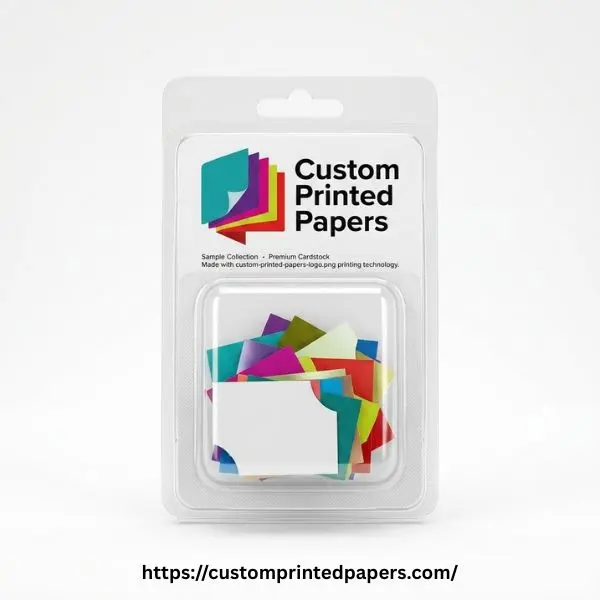
A blister pack only works if the card behind it bonds to the plastic blister so well that no one can quietly pry it open and reseal it. That bond is not glue, it is a heat seal coating on a specific board, and getting the board wrong is why some blister packs peel apart cleanly while good ones tear their own fibres before they let go. Custom Printed Papers makes blister lidding paper for hardware, electronics, toy, stationery, and pharmaceutical packers across the USA and Canada, as part of the custom heat seal paper range.
Blister lidding paper is heat-seal-coated paperboard, usually solid bleached sulfate, that bonds to a plastic blister under heat and pressure. The coating forms a fibre-tearing bond so the pack cannot be opened without destroying the card, making it tamper-evident. The printed card face carries product graphics and branding.
Request Custom Quote

No Die & Plate Charge

4 to 6 Days Turnaround

Free Shipping

FREE Custom Designing
Why a fibre-tearing bond is the whole point
A correctly sealed blister card forms a fibre-tearing bond: the paper fibres rip apart before the seal itself fails. This is what makes the pack genuinely tamper-evident, since any attempt to open it visibly destroys the card. A weak, non-fibre-tearing bond peels cleanly and defeats the security the packaging exists to provide.
The strength of the bond is the difference between real and fake security. Retailers rely on blister packs to resist in-store tampering and theft, and that only holds if opening the pack leaves obvious damage. The heat seal coating is engineered to grip the blister plastic harder than the board’s own fibres hold together, so the board delaminates rather than releasing. That destructive opening is the feature, not a flaw.
Why the board grade decides success
Blister board is a low-density solid bleached sulfate paperboard engineered to give good fibre-tearing bonds. Using ordinary card instead produces weak, failure-prone bonds. The board is clay-coated on the print side to take graphics, and double-coated for fold-over cards, so the grade is as important as the coating.
This is where packers who source on price get caught out. The right SBS blister board is built to release its fibres cleanly into the seal, which a generic board will not do, leaving bonds that look sealed but pop open. The print side carries a clay coating for sharp graphics, while the seal side takes the heat seal coating. For fold-over and two-part cards, the board is coated both sides. Specify blister board, not just “card.”
How the seal is made on a blister line
The process is fast and mechanical. The thermoformed plastic blister holds the product, the printed heat-seal-coated card is placed against the blister’s flange, and a heated sealing tool presses the two together for a set dwell time. The coating activates, bonds to the plastic, and on release the pack is sealed with the product captured inside. Aqueous blister coatings can run in-line on sheet-fed presses in a single pass, which is what makes blister packaging an economical, high-volume method.
Which blister card format do you need?
The format follows the product and the display. A face-seal card seals only around the blister flange; a full-face card seals across the whole back for maximum security; a fold-over or clamshell card seals front and back around the product. Each uses heat-seal-coated board, single or double-sided depending on whether one or both faces must bond. Tell us the blister material, PVC or PET, and the format, and we match the board and coating.
It is prime branding and compliance space
The blister card is a billboard at shelf height. The large printed face carries the logo, product photography, feature callouts, and the legal text a category needs, dosage and lot for pharma, specs and barcodes for hardware. We print it at high line screen for crisp small text and barcodes, with the heat seal coating kept to the seal face so printing never interferes with the bond. Matte, gloss, and foil finishes lift the card on shelf.
Frequently asked questions
What is blister lidding paper? Heat-seal-coated paperboard, usually SBS blister board, that bonds to a plastic blister under heat and pressure to seal and display a product.
Why does it need special board? Blister board is engineered to give a fibre-tearing, tamper-evident bond. Ordinary card produces weak bonds that peel open.
What plastics does it seal to? Most commonly PVC and PET blisters. The coating is matched to the blister material you use.
Is it tamper-evident? Yes. A correct fibre-tearing bond destroys the card if anyone tries to open the pack, which is the security feature.
Can it be printed? Yes. The card face prints full-colour graphics, legal text, and barcodes, with the coating kept to the seal face.
What is the MOQ and turnaround? Orders start at 50 units, with a free proof and seal sample, in 4 to 6 business days.
Seal blister packs that can’t be opened without showing it. Order custom blister lidding paper on a 50-unit minimum, with a free proof and seal sample, and free shipping in 4 to 6 business days. Tell us your blister material to start.
Frequently asked question content metrics for this dynamic product line are being processed. Check back shortly.
Production Artwork Guidelines & Templates Layout Boundaries
Format files according to these critical dimensions lines parameters to avoid machine tooling errors:
- Vector files must be saved in CMYK color format scheme models (AI, PDF, or EPS formats prioritized).
- Maintain text and crucial layout graphic art structures at least 0.125 inches inside safety markers.
Fast Cycle Pipeline Order Fulfillment Process
Track your design variables generation through our highly coordinated production infrastructure:
- Design Specification Configuration & Dimension Parameters Ingestion.
- Digital Blueprint 3D Viewport Approvals & Layout Approvals Verification.
- Mass Production Assembly Line Tooling & Finishing Steps Layout.
High-Grade Sustainable Substrates Profiles Matrix
Choose from our extensive inventory of technical manufacturing materials stock arrays:
- Eco-Friendly Bleached / Natural Kraft Cardstock.
- High-Density Rigid Luxury Boxboard Framing Stocks.
Surface Coatings, Protective Films, & Lamination Options
Customize outer reflection behaviors with these premium coating options:
- High Gloss Exterior Reflection Shield.
- Velvet Matte Silk Touch Zero Glare Protective Surface Lamination.
Special Finishes, Foil Stamp Treatments, & Design Accents
Enhance shelf performance using these specialized accents:
- Metallic Foil Hot-Stamping Accents (Gold, Silver, Rose Copper Options).
- Raised Spot UV Precision Fluid Layer Detailing.
Related Products
Ready To Elevate Your Papers?
Get premium custom papers designed specifically for your brand.