-
 In Stock
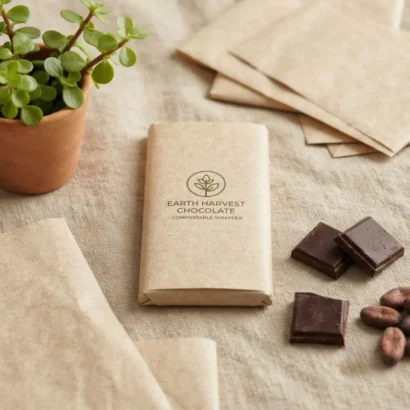
Compostable Chocolate Wrappers
"Eco-friendly" is easy to print and hard to prove. Compostable chocolate wrappers...Request a Quote -
In Stock
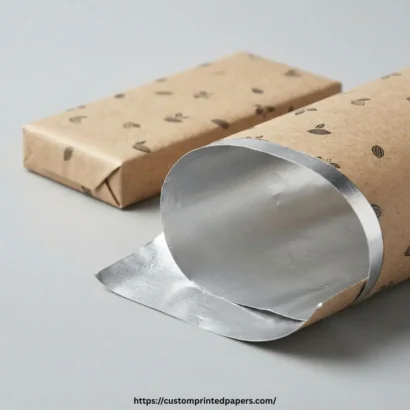
Foil-Backed Chocolate Paper
Foil-backed chocolate paper is the material most premium bars are wrapped in,...Request a Quote -
In Stock
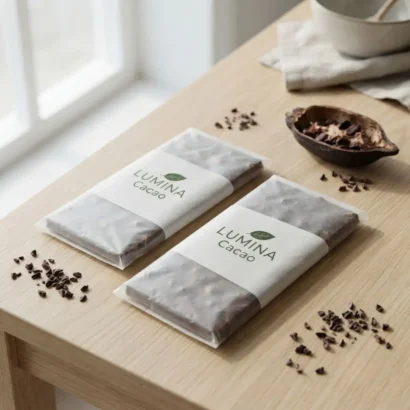
Glassine Chocolate Wrappers
Not every chocolate brand wants foil. A growing number want a wrapper...Request a Quote -
In Stock
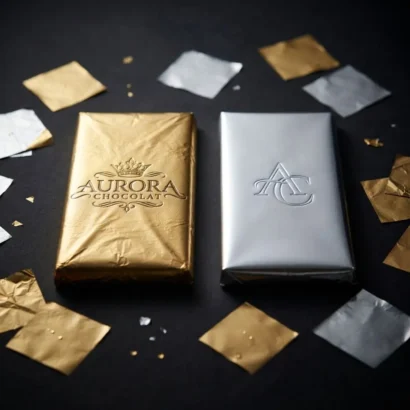
Gold & Silver Foil Chocolate Wrappers
A chocolate wrapped in gold reads as a gift before anyone tastes...Request a Quote -
In Stock
Truffle & Bonbon Wrappers
A truffle is round, soft, and small, which makes it one of...Request a Quote
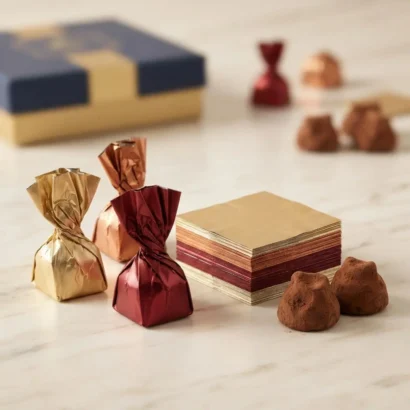
Custom Chocolate Wrapping Paper — Foil-Backed, Triple-Barrier Wrappers, Printed With Your Logo
Chocolate is the most fragile thing a wrapper ever has to protect. Light dulls its colour, oxygen turns the cocoa butter rancid, a few degrees of warmth or a damp shelf pushes a grey bloom to the surface, and a strong smell nearby ends up in the flavour. Ordinary paper stops none of that. Custom Printed Papers makes foil-backed chocolate wrapping paper engineered against all five threats, for chocolatiers, confectioners, and gift brands across the USA and Canada. It sits alongside the rest of our custom food paper range.
Custom chocolate wrapping paper is a foil-backed, food-grade wrap that shields chocolate from light, oxygen, moisture, heat, and odour. The aluminium layer blocks all three barriers that cause fat bloom and sugar bloom, the dead-fold finish holds a tight wrap, and the paper face prints your brand. It meets FDA 21 CFR 176.170.
The wrapper does two jobs at once. It preserves the chocolate, by sealing out the conditions that ruin flavour and appearance, and it sells the chocolate, by carrying your logo, colours, and finish onto the shelf. Get both right and a bar looks premium and tastes exactly as the chocolatier intended, weeks after it left the kitchen. Orders run on a 50-unit minimum and ship in 4 to 6 business days.
What Paper Is Used to Wrap Chocolate?
Chocolate is wrapped in foil-backed paper, glassine, or wax-laminated paper. Foil-backed paper is the standard, because aluminium blocks light, oxygen, and moisture together. Glassine suits lighter, eco-focused wraps. The food-contact side is paper or waxed foil, and the outer face carries the print.
The choice comes down to how sensitive the chocolate is and how the brand wants to present it. A delicate single-origin bar or an export product needs the full foil barrier. A rustic, eco-positioned brand may accept glassine's lighter protection for a recyclable wrap. Most chocolatiers run foil-backed paper because it protects and prints in one material.
Why Is Chocolate Wrapped in Foil?
Foil is wrapped around chocolate because aluminium is the only common material that blocks light, oxygen, and moisture at once. Light causes fat bloom, oxygen causes rancidity, and moisture causes sugar bloom. A single foil layer stops all three, which is why it has wrapped chocolate for over a century.
This is the triple-barrier principle, and it is the heart of why chocolate packaging looks the way it does. Remove any one barrier and the chocolate becomes vulnerable on that front. Aluminium delivers all three in a layer thinner than a human hair, which no paper or single plastic film can match.
The 5 Enemies of Chocolate, and How the Wrapper Stops Each
Chocolate degrades through five environmental threats. A properly built wrapper answers every one.
- Light breaks down flavour compounds and triggers fat bloom. The foil's opacity blocks UV and visible light completely.
- Oxygen oxidises cocoa butter into stale, rancid notes. Aluminium's structure stops gas transmission.
- Moisture dissolves surface sugar that recrystallises into gritty sugar bloom. The foil's low water-vapour transmission seals humidity out.
- Heat migrates cocoa butter to the surface as greyish fat bloom. Foil reflects radiant heat and a dead-fold wrap stays sealed.
- Odour from nearby products taints chocolate's delicate aroma. The same oxygen barrier blocks foreign smells.
What Is Fat Bloom and Sugar Bloom?
Fat bloom is a greyish-white film from cocoa butter migrating to the surface, caused by heat or light. Sugar bloom is a gritty white coating from moisture dissolving and recrystallising surface sugar. Both ruin appearance, and sugar bloom also ruins texture. The right wrapper prevents both.
Customers read bloom as spoilage, even though the chocolate is safe to eat, so it directly costs sales. Fat bloom comes from temperature and light; sugar bloom comes from humidity. A foil barrier addresses the root cause of each by sealing the chocolate away from the conditions that trigger them.
Is Foil or Paper Better for Wrapping Chocolate?
Foil-backed paper is better for most chocolate, because it combines aluminium's full barrier with a printable paper face. Plain paper alone protects against none of the three barrier threats. Glassine offers light grease and moisture resistance for eco-focused brands, but not the complete protection foil provides.
| Material | Light | Oxygen | Moisture | Recyclable | Best For |
|---|---|---|---|---|---|
| Foil-backed paper | Full | Full | Full | Limited | Premium bars, export, long shelf life |
| Glassine | Partial | Low | Moderate | Yes | Eco brands, short shelf life |
| Wax-laminated paper | Partial | Low | Good | Limited | Truffles, rustic wraps |
| Plain paper | None | None | None | Yes | Outer sleeve only |
What Is Dead-Fold, and Why Does It Matter?
Dead-fold is a wrapper's ability to hold a crease without springing back open. Foil has excellent dead-fold, so a wrapped bar stays tightly sealed and keeps its neat shape on the shelf. Plain paper springs back and loosens, which breaks the barrier and looks untidy.
For chocolate, dead-fold is both function and presentation. A wrap that stays closed keeps the air and moisture seal intact, and a bar that holds its crisp folded shape in the box reads as premium. This is why foil and foil-backed paper dominate bar wrapping where a tight, lasting fold matters.
What Thickness and Specs Should Chocolate Wrappers Have?
Chocolate foil runs 6.5 to 12 micron, and paper backing runs 25 to 40 gsm. Thinner foil suits machine wrapping and twist wraps; thicker foil and heavier backing suit premium bars that must hold a firm shape. The spec follows the chocolate format and the wrapping method.
| Spec | Range | Use |
|---|---|---|
| Foil thickness | 6.5–12 micron | Thin for twist/machine wrap, thick for premium bars |
| Paper backing | 25–40 gsm | Heavier backing for stiffness and shape |
| Finish | Gold, silver, matte, gloss | Shelf presence and brand tone |
| Effects | Emboss, deboss, foil stamp | Luxury tactile branding |
Types of Custom Chocolate Wrapping Paper
Pick the material and finish that match your chocolate, shelf life, and brand. Each one prints and embosses to your design.
Foil-Backed Chocolate Paper
Our foil-backed chocolate paper bonds aluminium to a printable paper face, delivering the full light, oxygen, and moisture barrier with your branding on the outside.
Gold & Silver Foil Wrappers
Our gold and silver foil wrappers add instant luxury for truffles, bonbons, and gift bars, with embossing and foil-stamp options for a premium feel.
Glassine Chocolate Wrappers
Our glassine chocolate wrappers give a recyclable, naturally grease-resistant wrap for eco-positioned and short-shelf-life chocolate.
Truffle & Bonbon Wrappers
Our truffle and bonbon wrappers are small, pre-cut foil squares sized for hand-wrapping individual pieces with a clean, gift-ready finish.
Compostable Chocolate Wrappers
Our compostable chocolate wrappers use bio-based barrier films for brands that need protection and a genuine sustainability claim.
How Do You Wrap a Chocolate Bar?
Wrap a chocolate bar by placing it face-down on the foil's centre, folding both long sides over to overlap, then folding and tucking the ends. Foil's dead-fold holds the seal without tape. Add a printed paper sleeve over the foil for branding.
- Cut the foil 2 to 3 cm larger than the bar on every side.
- Place the bar face-down in the centre, foil side out.
- Fold the two long sides over to overlap across the back.
- Crease and tuck the short ends under, pressing the dead-fold to seal.
- Slide a printed sleeve over the wrapped bar for your branding.
Who Uses Custom Chocolate Wrapping Paper?
Chocolatiers, artisan chocolate makers, confectioners, and gift and wedding-favour brands use custom chocolate wrapping paper. Craft makers wrap single-origin bars, gift brands wrap favours and seasonal lines, and confectioners wrap truffles and bonbons. Every wrapper protects the chocolate and presents the brand.
The artisan chocolate boom has driven demand for wrappers that look as considered as the chocolate inside. A craft maker charging a premium needs packaging that signals it, and a foil wrapper with an embossed logo does exactly that, while keeping the bar in perfect condition to the first bite.
Custom Printing, Embossing, and Foil-Stamping
Custom Printed Papers prints chocolate wrappers with food-safe inks in CMYK or exact Pantone, and adds embossing, debossing, and foil-stamping for a luxury feel. Printing sits on the outer face, away from the chocolate. Gold and silver foils, matte and gloss finishes, and tactile embossing build premium shelf presence.
Chocolate is an impulse and gift purchase, so the wrapper's look drives the sale. An embossed logo that catches the light, a deep matte foil, or a clean Pantone-matched colour turns a bar into a giftable object. The print never touches the chocolate, so branding and food safety stay separate.
Is Custom Chocolate Wrapping Paper Food-Safe and Recyclable?
Custom chocolate wrapping paper meets FDA 21 CFR 176.170 for food contact and is made under ISO 22000 food-safety standards. Foil-backed grades trade recyclability for full barrier protection. Glassine and compostable grades offer recyclable or compostable alternatives for eco-focused brands.
The food-contact face, whether paper or waxed foil, is cleared for direct contact, and inks stay on the outer surface. On sustainability, there is an honest trade: foil protects best but recycles poorly, while glassine and compostable films recycle or compost with somewhat lighter protection. We help match the grade to your priority.
Frequently Asked Questions About Custom Chocolate Wrapping Paper
What paper is used to wrap chocolate?
Chocolate is wrapped in foil-backed paper, glassine, or wax-laminated paper. Foil-backed paper is the standard because aluminium blocks light, oxygen, and moisture together.
Why is chocolate wrapped in foil?
Foil blocks light, oxygen, and moisture in a single layer. These are the three threats that cause fat bloom, rancidity, and sugar bloom, so foil protects all at once.
What causes the white film on chocolate?
Fat bloom is a greyish film from cocoa butter migrating in heat or light. Sugar bloom is a gritty white coating from moisture. A foil wrapper prevents both.
Is foil or paper better for chocolate?
Foil-backed paper is better for most chocolate, since it combines aluminium's full barrier with a printable face. Plain paper protects against none of the three threats.
What is dead-fold foil?
Dead-fold is foil's ability to hold a crease without springing back. It keeps a wrapped bar sealed and neatly shaped, which plain paper cannot do.
Is chocolate wrapping paper food-safe and recyclable?
Yes to food-safe: it meets FDA 21 CFR 176.170. Foil grades recycle poorly; glassine and compostable grades offer eco-friendly alternatives.
What size and thickness do I need?
Foil runs 6.5 to 12 micron and backing 25 to 40 gsm. Cut size runs 2 to 3 cm larger than the chocolate on each side. Custom sizes are cut to order.
Do you offer custom sizes, MOQ, and turnaround?
Yes. We supply foil, glassine, and compostable wrappers in any custom size on a 50-unit minimum, with a free proof in one business day and shipping in 4 to 6 business days.
Order Your Custom Printed Chocolate Wrapping Paper Today
Protect every bar from bloom and oxidation while making it look gift-worthy on the shelf. Pick your material, finish, and size, upload artwork in PDF, AI, EPS, or PNG at 300 DPI minimum, and our team returns a print-ready proof within one business day. Order now for FDA food-safe, foil-backed chocolate wrapping paper on a 50-unit minimum with free shipping in 4 to 6 business days.