
A restaurant owner in Oregon received a supplier notice in early 2025. The greaseproof paper they had been ordering for four years the same paper with “eco-friendly” printed on the box contained intentionally added PFAS. Oregon’s food packaging restriction had just taken effect on January 1, 2025. They had weeks to find an alternative for every wrapping station in three locations.
This is not a hypothetical. It is what is happening to food businesses across the United States right now.
As of June 2026, PFAS-containing food packaging is banned in New York, California, Washington, Vermont, Connecticut, Colorado, Maryland, Minnesota, Hawaii, Oregon, and Rhode Island. Maine’s ban takes effect May 25, 2026. The FDA’s voluntary phase-out has already pushed PFAS-treated papers out of most major supply chains.
The problem is not the regulation. The problem is that “eco-friendly” printed on a food paper box means absolutely nothing legally. It is an unregulated marketing term. Any supplier can use it, regardless of what is actually in the product.
This guide cuts through the label noise. It covers what the certifications on food paper actually verify, which paper types genuinely qualify as sustainable, how to match them to your kitchen operations, and the five questions you need to ask any supplier before placing an order.
“Eco-Friendly” Is Not a Regulated Term – Here Is Why That Matters
Walk into any restaurant supply trade show and you will see the words eco-friendly, sustainable, natural, and biodegradable on almost every paper product on display. None of these terms have a legal definition in US food packaging. There is no government body certifying that a product labeled “sustainable” has met any specific standard.
This creates a real problem for restaurant operators trying to make responsible purchasing decisions. A paper coated with petroleum-derived paraffin wax can legally be called “natural.” A paper containing low levels of PFAS can be marketed as “eco-conscious.” A paper that only breaks down in an industrial composting facility operating at 55–60°C can be sold as “compostable” without any qualification.
The only way to verify what a food paper actually is – what it is made from, how it behaves at end of life, and whether it is genuinely safe for food contact – is through third-party certification. Three of them matter for food paper specifically.
FSC (Forest Stewardship Council) certifies one thing only: that the wood pulp used to make the paper came from a responsibly managed forest with verified chain-of-custody documentation from tree to finished product. FSC says nothing about whether the paper is compostable, PFAS-free, or safe as a food contact material. It is a sourcing certification, not a performance or end-of-life certification.
BPI (Biodegradable Products Institute) certifies that the paper will break down within 180 days under commercial composting conditions – specifically ASTM D6400 or D6868 standards. Here is what most restaurants do not know: BPI certified does not mean home compostable. It means industrial composting, in a commercial facility operating at specific temperature and humidity ranges. If your city or municipality does not have a commercial composting program, a BPI-certified food paper wrapper thrown in your general waste bin ends up in landfill and does not break down on any meaningful timeline.
PFAS-free is not a certification body – it is a material claim that must be backed by independent laboratory test documentation. Specifically, it means the paper and its coatings contain no per- and polyfluoroalkyl substances at detectable levels. California AB 1200 requires written attestations from suppliers. Any credible PFAS-free supplier has these test reports on file and provides them on request without hesitation. If they cannot, the claim is unverified.
Understanding what these three things actually certify – and what they do not is the baseline for making any informed decision about food paper.
The Food Papers That Are Genuinely Sustainable – And What Each One Does in a Kitchen
There are five food paper types that carry verifiable eco credentials. Each performs differently. Choosing the wrong one for your application does not save the environment – it just creates an operational problem.
Unbleached Kraft Paper
Kraft paper made without chlorine bleaching is one of the cleanest food papers from a material standpoint. FSC-certified wood pulp, no chemical coating, fully recyclable in standard paper streams, and biodegradable. The natural brown color is the visual signal of its unbleached production.
What it does not do: kraft paper has no inherent grease resistance without a coating. A plain kraft sheet used to wrap a burger or a deli sandwich with a wet filling will bleed through within minutes. It is not suitable for direct contact with fatty or wet food without a grease-resistant treatment – and most grease-resistant treatments compromise its recyclability.
Where it works: bakery items with low moisture content, dry food wrapping, bag lining for baked goods, packaging for room-temperature pastry items. For these applications, it is the simplest, most recyclable, and most biodegradable option available.
Unbleached Parchment Paper
Unbleached parchment in its natural brown form is the strongest all-round eco performer for food service applications involving heat. It carries FSC certification on the fiber, PFAS-free food-grade silicone coating, and BPI certification on the unbleached variants – the full set of verifiable eco credentials in one product.
The silicone coating is what makes it non-stick and heat resistant to 230°C. That same coating is what makes it unsuitable for standard paper recycling streams – silicone-coated papers are not accepted by most paper mills. BPI certified compostable remains the appropriate end-of-life path for silicone-coated parchment in areas with commercial composting access.
Where it works: any application involving heat. Bakery tray lining, oven sheet pan lining, croissant and pastry production, burger and sandwich presentation – anywhere that requires a non-stick, grease-resistant paper that holds up through food service temperature. → Custom Parchment Paper
Uncoated Greaseproof Paper
Greaseproof paper achieves its grease resistance differently from every other paper on this list. There is no coating. The paper is manufactured by beating wood pulp fibers to a much higher density than standard paper – the dense fiber network physically blocks the passage of oil and grease without any chemical treatment.
This makes uncoated greaseproof paper the most straightforwardly recyclable option in food service. No silicone. No wax. No coating of any kind. FSC-certified fiber, fully recyclable in standard paper streams, and biodegradable. The food contact performance is real – it resists grease from burgers, fried food, and fatty deli items without any additional treatment.
What it does not do: it is not oven-safe. The grease resistance is physical, not thermal — it cannot handle direct oven heat. And for very wet or liquid food contact, the dense fiber structure will eventually saturate. It is a food service paper, not a baking paper.
Where it works: burger wrapping, basket lining, tray lining, sandwich service, fried food packaging — the highest-volume wrapping application in most QSR and casual dining operations. → Custom Greaseproof Paper
Soy Wax Paper
Traditional wax paper uses paraffin – a petroleum-derived wax – as its coating. Paraffin wax does not break down biologically and is not compostable. Soy wax paper replaces that coating with plant-based soy wax, which is compostable, BPI-certifiable, and free of petroleum products.
The performance profile is similar to standard wax paper: non-stick surface, moisture resistance, good handling for cold food applications. The critical limitation is the same: not oven-safe. Soy wax begins to melt at approximately 49–65°C, making it entirely unsuitable for any heated application.
Where it works: cold sandwich wrap, deli counter lining, bakery takeaway wrapping for room-temperature items, confectionery base wrap. For cold food service operations committed to compostability, soy wax paper is the appropriate PFAS-free, plant-based alternative to conventional wax paper. → Custom Wax Paper
PFAS-Free Coated Paper
A growing category of food papers use advanced barrier coatings – aqueous (water-based) polymer coatings, PLA (polylactic acid from plant starch), or mineral-based formulations – that provide grease and moisture resistance without any fluorinated chemistry.
These papers are engineered specifically as PFAS replacements. They carry FDA food contact compliance and PFAS-free documentation. Compostability varies by specific coating type – aqueous-coated papers are generally repulpable and recyclable; PLA-coated papers are BPI compostable. Verify the specific coating and its end-of-life credentials before ordering.
Where it works: any application where grease resistance is required, PFAS compliance is mandatory (all US states with active bans), and the operator wants to maintain full recyclability or compostability documentation for compliance purposes.
Side-by-Side: How the Options Compare
| Paper Type | FSC | BPI Compostable | PFAS-Free | Recyclable | Oven-Safe | Best Application |
|---|---|---|---|---|---|---|
| Unbleached Kraft | Dry bakery wrap · bag lining | |||||
| Unbleached Parchment | Composting | Baking · tray lining · hot food | ||||
| Uncoated Greaseproof | Burger · basket liner · deli | |||||
| Soy Wax Paper | Cold wrap · deli takeaway | |||||
| PFAS-Free Coated | Varies | Varies | Varies | PFAS-compliant grease barrier | ||
| Standard Wax Paper | Varies | Varies | Not recommended |
Matching the Right Paper to Your Kitchen – By Operation Type
The comparison table tells you what each paper is. This section tells you which one your kitchen actually needs.
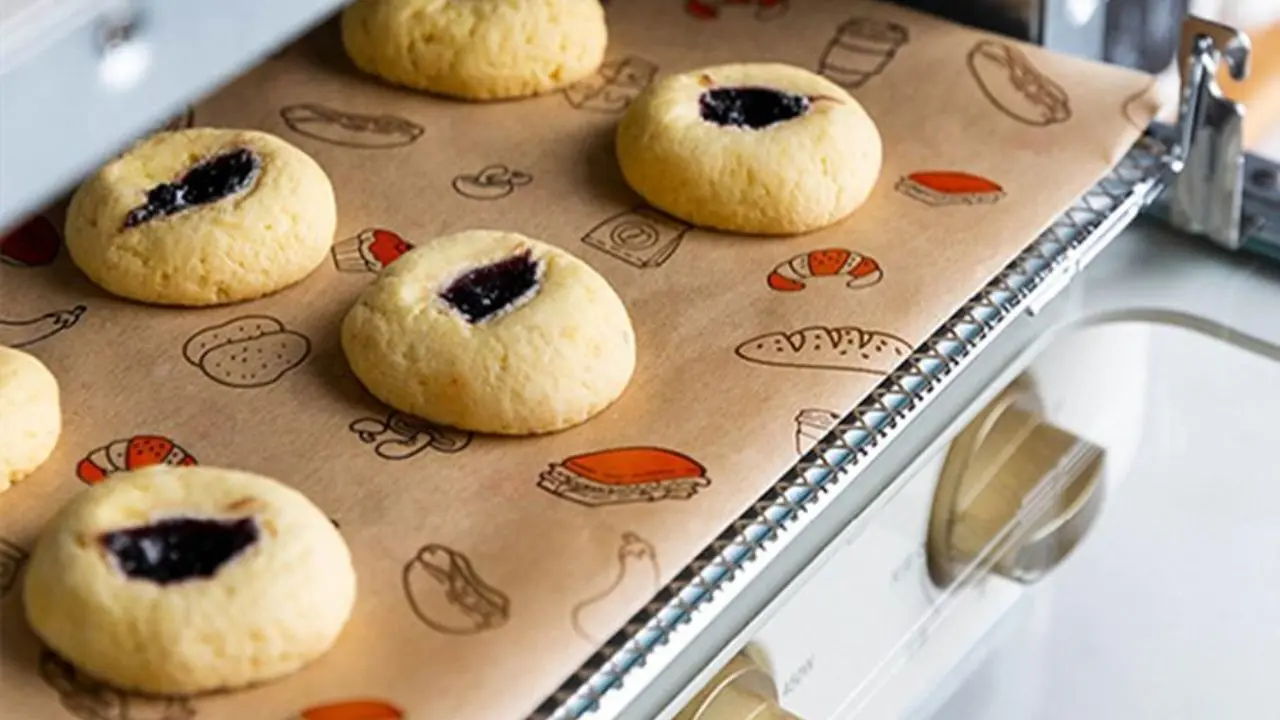
Bakeries and cafes operate with the simplest transition. Unbleached parchment replaces standard parchment on a one-to-one basis. Same oven performance, same non-stick release, same tray dimensions, better environmental profile. There is no workflow change. The visual difference natural brown rather than white communicates the sustainability choice visibly to every customer who sees the product come out of the kitchen.
Burger restaurants and QSR operations run their highest volume through tray liners and burger wrappers. Uncoated greaseproof paper handles the grease load of a burger service without any coating and with full recyclability. For QSR operations in states with active PFAS bans, this is also the straightforward compliance switch – uncoated paper carries no PFAS risk by definition.
Deli and sandwich operations typically use paper at cold and room-temperature. Soy wax paper handles cold deli wrapping – sub rolls, sandwiches, cold cuts with full compostability credentials. Uncoated greaseproof handles the counter lining and basket presentation. Neither requires oven-safe properties.
Food trucks and mobile operations benefit most from kraft or greaseproof in roll format. One roll at a dispenser station handles every item on a variable menu without pre-cut size management. Both carry full eco credentials. Both are fully recyclable.
Multi-location operations face the most complex transition. Standardizing on a single supplier with documented FSC, BPI, and PFAS-free credentials across the full paper range removes the compliance risk of managing multiple supplier certifications across different state jurisdictions. Custom printed paper with consistent branding also ensures visual brand consistency across locations regardless of which specific paper type each station uses.
Five Questions to Ask Any Food Paper Supplier Before You Order
This is the most useful section in this guide. Ask these five questions of any supplier making eco-friendly claims about their food paper. A credible supplier answers all five immediately. If they cannot, the claims on the label are not verified.
Can you provide your FSC chain-of-custody certificate number?
FSC certification requires a chain-of-custody certificate that tracks the fiber from certified forest through every stage of manufacturing to the finished product. The certificate has a unique number you can verify directly on the FSC database at info.fsc.org. Saying “we use FSC certified materials” without a verifiable certificate number means the chain-of-custody documentation may not cover your specific product.
Is this BPI certified – and does that mean home or industrial composting?
BPI certification means industrial composting commercial facilities operating at 55–60°C. If your municipality does not operate or have access to a commercial composting program, BPI-certified food paper placed in your general waste goes to landfill and does not break down on any meaningful timeline. Know what your local waste infrastructure supports before choosing compostability as your primary sustainability credential.
Can you provide PFAS-free test reports from an independent laboratory?
The claim needs documentation. California AB 1200 specifically requires written supplier attestations for food packaging sold in California. A supplier with genuine PFAS-free credentials has independent laboratory test reports on file. If they offer a product specification sheet that simply states “PFAS-free” without referencing a test method or laboratory, request the actual reports. If they cannot provide them, the claim is unverified.
What exactly is the coating material?
Food-grade silicone PFAS-free and food-safe. Quilon chromium-based, not recommended. Paraffin wax petroleum-derived, not compostable. Soy wax plant-based, compostable. Aqueous polymer water-based, generally recyclable. PLA plant-starch derived, industrially compostable. The word “coating” tells you nothing. The specific material and its independent test documentation tell you everything.
Does FDA 21 CFR 176.170 compliance documentation exist for this product?
Eco-friendly and FDA food contact compliant are separate requirements that must be verified independently. A paper can be BPI compostable, FSC certified, and PFAS-free – and still not meet FDA requirements for direct food contact if the specific coating formulation has not been tested to CFR standards. For any paper in direct contact with food, verify FDA compliance separately from the eco certifications.
The Practical Reality of Making the Switch
The operational reality of switching to eco-friendly food paper is simpler than most restaurant operators expect. The papers perform identically to their conventional equivalents in the applications they are designed for. Unbleached parchment bakes at the same temperature as standard parchment. Uncoated greaseproof resists burger grease as effectively as PFAS-coated alternatives. The workflow does not change.
What changes is the supplier conversation — specifically, knowing which certifications to request and being able to verify them. That one change is what separates a genuine sustainability switch from a label swap that looks the same on a box but accomplishes nothing.
Custom-printed eco-friendly food paper adds a dimension beyond compliance. Every piece of paper your kitchen uses is a customer touchpoint — at the table, in the basket, in the takeaway bag. Unbleached kraft with your logo, natural parchment with your brand color, or greaseproof with your design communicates your environmental commitment at the exact moment the food reaches your customer. That visibility costs nothing extra beyond the print.
Our custom food paper range — parchment, greaseproof, kraft, and wax paper variants — is FSC certified, BPI compostable where applicable, and PFAS-free throughout. Available from 50 sheets with free design support and free shipping across the United States.
What is the most eco-friendly food wrapping paper for restaurants?
Uncoated greaseproof paper has the strongest overall eco profile for food service — FSC certified, fully recyclable in standard paper streams, no chemical coating, and biodegradable. For oven-safe applications, unbleached parchment (FSC certified, BPI compostable, PFAS-free silicone coating) is the best-performing eco option.
The right answer depends on your application — no single paper type is optimal for every use case.
Which US states have banned PFAS in food packaging?
Active bans are currently enforced in New York, California, Washington, Vermont, Connecticut, Colorado, Maryland, Minnesota, Hawaii, Oregon, and Rhode Island. Maine’s legislative ban goes into effect on May 25, 2026.
If you are ordering food paper today, specify PFAS-free regardless of your state — the FDA’s voluntary phase-out has already pushed PFAS-treated papers out of most major US supply chains.
What is the difference between compostable and biodegradable food paper?
Biodegradable is an unregulated claim with no required timeframe or condition. A biodegradable paper in a landfill may take decades to break down.
BPI-certified compostable means the paper breaks down within 180 days under commercial composting conditions to ASTM D6400 or D6868 standards. BPI is a verified, third-party standard. Biodegradable without certification is a marketing term.
Is parchment paper recyclable?
Standard parchment paper — whether bleached or unbleached — is not accepted in most paper recycling streams because the silicone coating contaminates the paper pulp during recycling.
Unbleached parchment in BPI-certified form is industrially compostable, which is its appropriate end-of-life path in areas with commercial composting access. For applications where full recyclability is the priority, uncoated greaseproof paper is the more appropriate choice.
Can eco-friendly food paper be custom printed without losing its certifications?
Yes — provided the printing inks are food-contact compliant and the printing process does not alter the base paper’s coating. Food-safe inks are used throughout our custom printing process.
The FSC, BPI, and PFAS-free certifications apply to the base paper material. The print layer is applied using food-contact compliant inks with no chemical migration at food service temperatures. Custom printed eco-friendly food paper retains its full certification credentials.