
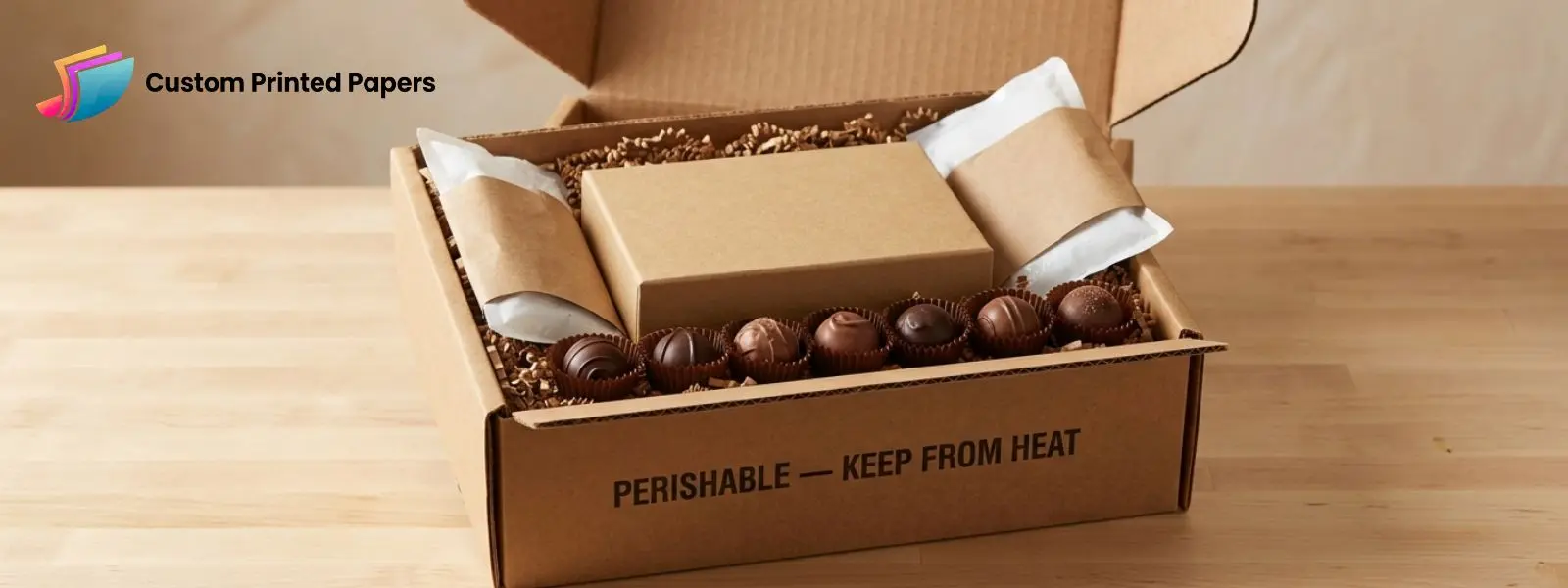
Package chocolates for shipping by pre-chilling them, cushioning each piece in a fitted box, insulating with a box 2 to 3 times larger, and adding wrapped gel packs. Ship overnight or 2-day, early in the week, to keep chocolate below its 90°F melting point.
Chocolate is one of the hardest products to ship. Heat melts it, moisture blooms it, and movement cracks it. A shipment can fail on any one of the three. This guide covers temperature control, cushioning, and timing, with the methods chocolatiers use to deliver chocolate intact in any season.
At What Temperature Does Chocolate Melt?
Chocolate softens near 80°F and melts between 86 and 90°F. Milk and white chocolate melt at lower temperatures than dark chocolate, because their added milk fats lower the melting point.
This narrow window is why shipping is precarious. A delivery truck or mailbox easily exceeds 90°F in summer, so the whole packaging method aims to keep the chocolate below that line for the full transit time.
How Do You Stop Chocolate Melting in Transit?
Stop chocolate melting by pre-chilling it, using an insulated box 2 to 3 times larger than the chocolate, and adding gel packs wrapped to prevent condensation. Ship overnight or 2-day in warm months to limit time in the heat.
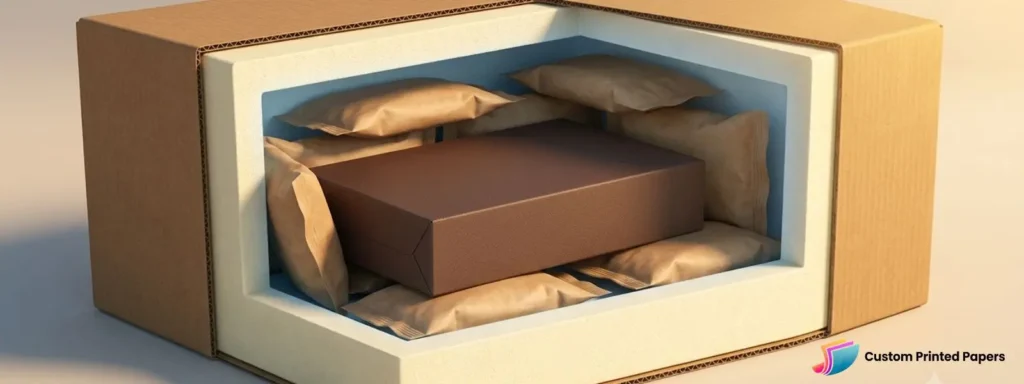
Build the shipment in layers. First, pre-chill the chocolate in a cool spot so it starts cold. Second, use an oversized insulated box, since the air gap buffers outside heat. Third, add gel packs, each wrapped in kraft paper or sealed in a bag so condensation never touches the chocolate. Fourth, choose the fastest practical service.

What Is the Difference Between Fat Bloom and Sugar Bloom?
Fat bloom is a greyish film from cocoa butter migrating in heat. Sugar bloom is a gritty white coating from moisture dissolving and recrystallizing surface sugar. Both ruin appearance, and both are common shipping failures.
The two have different causes, so they need different defenses. Fat bloom comes from heat, controlled by insulation and gel packs. Sugar bloom comes from moisture, often from gel-pack condensation, controlled by wrapping the packs and sealing the chocolate. This is why a wrapped gel pack matters: an unwrapped one can cause the very damage it was meant to prevent.
How Do You Stop Chocolates Cracking and Shifting?
Stop chocolates cracking by cushioning the box so pieces cannot move. A fitted candy pad under the chocolates and snug void fill around the box keep each piece in place, since movement is the main cause of cracked and smudged pieces.
Temperature gets the attention, but movement ruins as many shipments. Loose pieces collide and crack even when the chocolate stays cool. Two steps prevent it: a cushioned candy pad sized to the box base so the chocolates sit level and held, and packing material filling every gap so the inner box cannot slide. For fragile truffles on long routes, a 7 or 9-ply cushion pad absorbs the most shock.
What Materials Do You Need to Ship Chocolate?
Gather these before packing:
- An insulated outer box, 2 to 3 times the size of the chocolate.
- A fitted candy pad to cushion the chocolates in their box.
- Gel or cold packs, sized to the transit time.
- Kraft paper or sealable bags to wrap the gel packs.
- Void fill to stop the inner box shifting.
- A “PERISHABLE — KEEP FROM HEAT” label for the outside.
When Is the Best Day to Ship Chocolate?
Ship chocolate Monday through Wednesday, so it never sits in a warm transit warehouse over a weekend. Avoid shipping on Thursdays, Fridays, holidays, and during summer heat waves unless using overnight service.
Timing is a free defense. A package shipped early in the week moves while facilities are staffed and avoids the weekend stall. In summer, pair early-week shipping with overnight or 2-day service, and check the destination forecast before sending.
Frequently Asked Questions
At what temperature does chocolate melt?
Chocolate softens near 80°F and melts between 86 and 90°F. Milk and white chocolate melt lower than dark chocolate because their milk fats reduce the melting point.
How do you keep chocolate cold when shipping?
Pre-chill the chocolate, use an insulated box 2 to 3 times larger, and add gel packs wrapped to prevent condensation. Ship overnight or 2-day in warm months.
Why do gel packs need to be wrapped?
Unwrapped gel packs create condensation that causes sugar bloom, a gritty white film. Wrapping each pack in kraft paper or a sealed bag keeps moisture off the chocolate.
How do you stop chocolates moving in the box?
Use a fitted candy pad under the chocolates and pack void fill around the inner box. This keeps pieces level and held, so they do not slide and crack.
What is the best day to ship chocolate?
Monday through Wednesday, so the package avoids sitting in a warm warehouse over the weekend. Pair with overnight service in summer.
Protect Every Chocolate Shipment
Damage-free shipping starts inside the box. A fitted, cushioned candy pad keeps chocolates level and held, while branding lifts the unboxing. Explore custom candy pads in glassine, foil, and multi-ply cushioning, and custom chocolate wrapping paper to protect each bar, printed with your logo and shipped free across the US.