
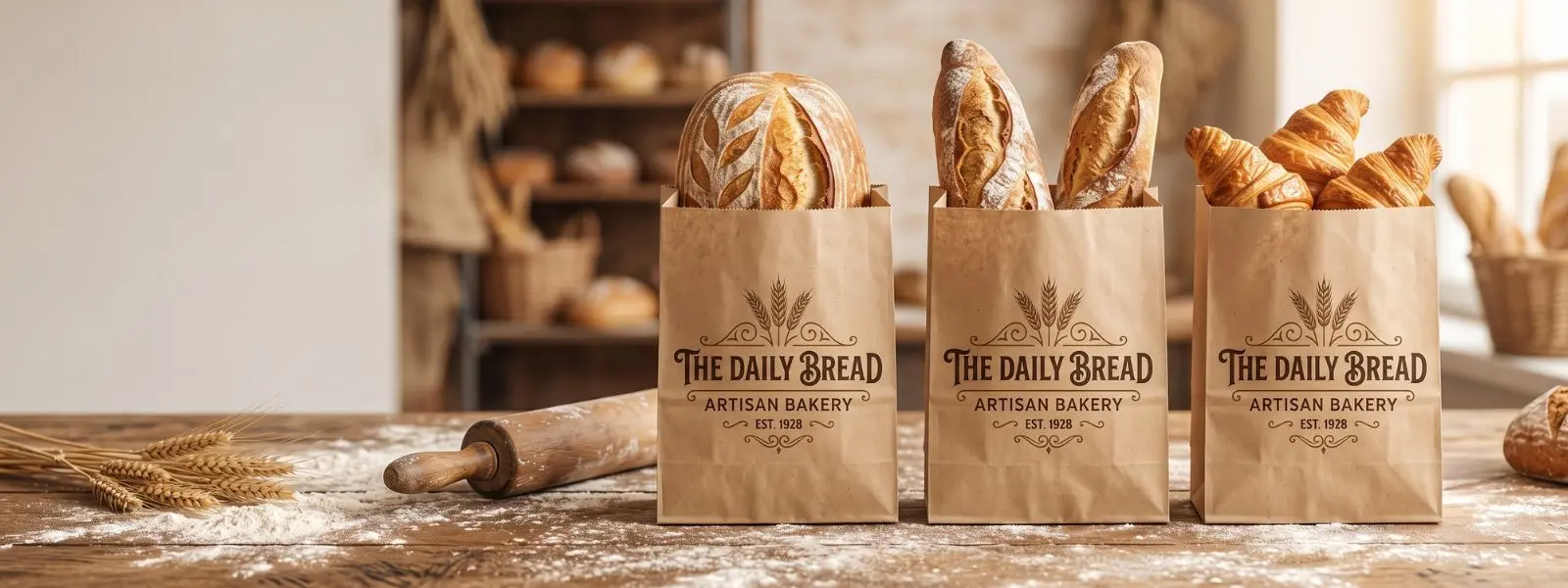
The bag around a loaf does more than carry it — it decides whether the crust a baker worked hours to perfect is still crisp when the customer gets home. Artisan bakers who obsess over hydration, fermentation, and bake color sometimes hand the result to the wrong bag and undo it in transit. The good news is that paper, chosen well, protects both the product and the brand.
Custom bakery paper bags are food-grade paper bags for bread and pastries. Paper is ideal because it breathes — letting steam escape so crusts stay crisp — with grease-resistant options for buttery items, clear windows to show the product, and tin-tie closures to reseal. The right bag depends on the baked good.
This breathability is the whole reason paper beats plastic for fresh bread: a plastic bag traps steam and turns a crackling crust soggy, while paper lets moisture out and keeps the crust intact. But not every baked good wants the same bag — a buttery croissant needs grease resistance a crusty baguette does not. This guide covers why paper suits fresh bread, the bag types and which baked good each fits, materials, sizes, and how to brand and order.
Why Are Paper Bags Best for Fresh Bread?
Paper bags are best for fresh bread because they breathe, letting steam escape so the crust stays crisp instead of turning soft. This is the single most important principle in artisan bread packaging.
Freshly baked crusty bread — baguettes, sourdough, boules — releases steam as it cools. Trap that steam in a sealed plastic bag and the moisture softens the crust into a chewy, soggy shell, undoing the bake. A breathable paper bag lets the steam pass through, so the crust holds its crackle and the crumb stays right. One practical tip that matters here: let very hot bread cool for a few minutes before bagging, since bagging bread straight from the oven creates excess moisture even in paper. For softer items and pastries the priorities shift, but for the crusty artisan loaves that define a good bakery, breathable paper is not a preference — it is the correct choice.
What Types of Custom Bakery Paper Bags Are There?
Bakery paper bags come in several types matched to specific baked goods, from long baguette bags to windowed pastry bags. Choosing the type by product is the fastest way to the right bag.
| Bag type | Best for | Key feature |
|---|---|---|
| Bread / loaf bag | Sandwich loaves, toast | Tall, breathable |
| Baguette bag | Baguettes, Italian bread | Long and narrow |
| Artisan gusseted bag | Sourdough, boules | Expandable, breathable |
| Window bag | Bread, cookies, pastries | Clear panel shows product |
| Tin-tie bag | Artisan bread, cookies | Resealable metal tab |
| Grease-resistant bag | Croissants, donuts, pastries | Oil-resistant lining |
| Pastry / cookie bag | Cookies, muffins, treats | Small, flat or SOS |
The logic is item-driven. Crusty loaves want a breathable bread, baguette, or artisan gusseted bag; buttery items like croissants and donuts want a grease-resistant bag so oil does not seep through; cookies, muffins, and treats suit small pastry bags, often windowed or tin-tie so customers can see and reseal them. Window bags add a clear panel — a tempting glimpse of the product that photographs and sells well — and tin-tie closures give a resealable top without needing extra ties. Many bakeries stock two or three types to cover their full case.
What Material Should Bakery Bags Be?
Bakery bags should be food-grade paper, with breathable plain kraft for crusty bread and a grease-resistant lining for buttery items — the material follows the product. Matching the two prevents both soggy crusts and greasy bags.
The base should always be food-grade, FDA-compliant paper with food-safe, non-toxic inks, since it is in direct contact with the product. From there, the key choice is breathable versus grease-resistant, and it is a genuine trade-off: a plain, unlined breathable kraft bag is right for crusty bread because it lets steam out, while a grease-resistant or poly-lined bag is right for buttery pastries because it blocks oil — but that same lining reduces breathability, so it is the wrong pick for a crackling baguette. On color, brown kraft reads rustic and artisan, while white gives a brighter, more polished display-case look. For windows, PLA panels are plant-based and compostable under commercial conditions, while PET panels are conventional, more durable plastic — both resist fogging from warm bread, but they differ on end-of-life. Choose unbleached, recyclable, or compostable stock to match your sustainability goals. For the grease barrier itself, see greaseproof paper; for baking liners, see the parchment paper for bakeries guide.
What Size Bakery Bags Do You Need?
Bakery bag size is set by the specific baked good, from long narrow baguette bags to wide bags for round loaves. Sizing to the product keeps bread snug and presentation clean.
As a rough guide: baguettes and Italian bread need long, narrow bags, often in the 20–28 inch range; standard sandwich loaves fit a bag around 5 × 3 × 18 inches; large round loaves and boules need wider bags, around 8–9 inches wide; and cookies, muffins, and small pastries fit compact bags from roughly 4 × 2 × 6 inches up. The simplest method is to measure your actual product — including how much it rises or spreads — and match the bag, or ask your supplier to recommend a size from your product list. A bag that is too small crushes a delicate crust, while one that is too large looks sloppy on the shelf, so a snug fit matters for both protection and presentation.
How Do You Brand and Order Custom Bakery Bags?
Brand and order custom bakery bags by choosing the type, material, and closure for your products, then adding a food-safe printed logo and approving a proof. A branded bag turns every loaf into on-the-go advertising.
Work through the specs in order: bag type (bread, baguette, window, tin-tie, grease-resistant, or pastry), material (breathable kraft or grease-resistant, brown or white, with PLA or PET window if used), and closure (tin-tie, fold-over, or open-top). Then add branding — a printed logo in food-safe, non-toxic inks, or a plain bag finished with custom sticker seals for smaller runs. Confirm the bags are food-grade and, ideally, recyclable or compostable, then approve a digital proof before production and check the minimum order quantity and lead time. Ordering the right type per product, all in one cohesive brand look, gives your bakery a polished, consistent case.
Explore custom bakery bags and windowed bakery bags, and pair with greaseproof paper for buttery items. Request a proof before your run.