
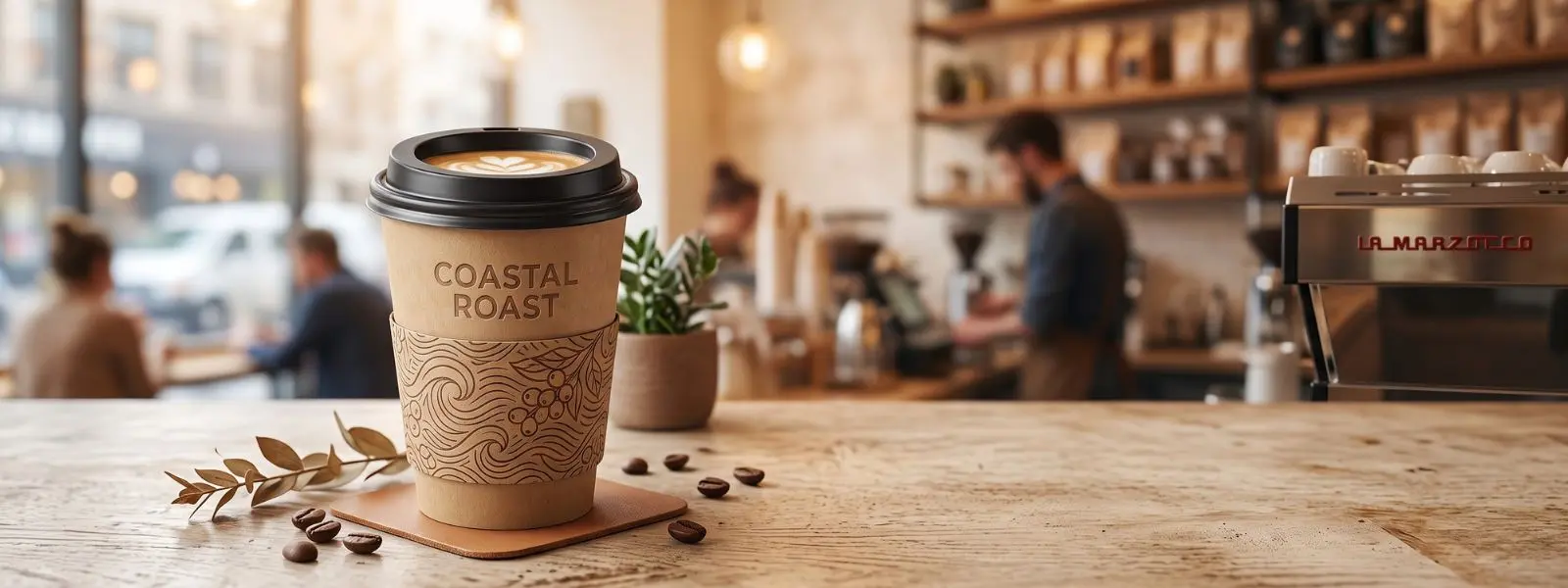
The takeaway cup is the most-seen object a coffee shop owns. It travels down the street, sits on desks, and appears in photos — a branded billboard held in thousands of hands a week. But behind the logo are decisions that affect heat, comfort, cost, and increasingly, sustainability compliance. Choosing the right cup means understanding wall structure, lining, and size before the artwork ever goes on.
Custom paper cups for coffee shops are food-grade paper hot cups — single-wall, double-wall, or ripple-wall — lined with PE, PLA, or a water-based coating, and printed with your brand. The main decisions are insulation (wall type), lining (cost vs sustainability), and size. The lining choice is where cost and eco-compliance collide.
Wall structure controls how the cup handles heat: single-wall is cheapest but often needs a sleeve, while double-wall and ripple-wall insulate on their own. Lining controls leak protection and end-of-life: traditional PE plastic is cheap and reliable, PLA is compostable, and water-based coatings are plastic-free and PFAS-free. This guide walks through cup types, sizes, linings, sleeves and lids, and how to brand and order — so your cups perform and represent the brand.
What Types of Paper Cups Do Coffee Shops Use?
Coffee shops use three hot-cup wall structures — single-wall, double-wall, and ripple-wall — each offering more insulation and grip than the last. The right one depends on drink temperature and the experience you want.
| Wall type | Insulation | Sleeve needed? | Best for |
|---|---|---|---|
| Single-wall | Basic | Yes, for hot drinks | Cold drinks, budget, high volume |
| Double-wall | Good (air gap) | No | Hot coffee, premium hand-feel |
| Ripple-wall | Best (textured) | No | Premium hot drinks, strong grip |
Single-wall cups are lightweight and cost-effective, ideal for cold drinks or short-term hot service, but very hot drinks usually need a sleeve to protect hands. Double-wall cups add a second paper layer with an insulating air gap, so they stay comfortable to hold without a sleeve and feel more premium. Ripple-wall cups have a corrugated textured outer layer that delivers the best insulation and a non-slip grip, staying cool to hold even with piping-hot drinks — a premium look customers notice. For hot coffee programs, double-wall and ripple-wall remove the need for separate sleeves, which can simplify inventory. Cold drinks like iced coffee and smoothies use dedicated cold cups rather than hot-cup structures.
What Sizes Do Coffee Cups Come In?
Coffee cups come in standard sizes from 4 oz to 20 oz, matched to the drink. Stocking the right range covers your whole menu without waste.
The common lineup is 4 oz for espresso and samples, 8 oz for a small coffee or cappuccino, 12 oz for a standard latte, 16 oz for a large, and 20 oz for extra-large and iced drinks — with larger sizes available for specialty menus. Most shops carry three or four sizes to match their menu, and it is worth confirming that your lids fit each cup size, since lids are typically size-specific. Choose sizes around your actual drink recipes rather than defaulting to the widest range, and keep the count of SKUs manageable for storage and ordering.
PE vs PLA vs Water-Based Lining: Which Should You Choose?
The lining is the most important sustainability decision: PE is cheap and reliable but hard to recycle, PLA is compostable, and water-based coatings are recyclable, plastic-free, and PFAS-free. All three keep the cup leak-proof; they differ on cost and end-of-life.
- PE (polyethylene) — the traditional plastic lining and industry standard for hot drinks, with excellent heat resistance, zero leaks, and low cost on high-speed lines. The downside is end-of-life: it is petroleum plastic, is not compostable, and is often rejected by standard curbside recycling.
- PLA — a plant-based lining that is compostable in commercial (and sometimes home) composting facilities, reducing petroleum plastic. It suits cafés positioning around compostability, provided customers have access to composting.
- Water-based (aqueous) coating — an innovative coating that replaces PE film, offering leak and heat resistance with improved recyclability and repulpability, and meeting plastic-free and PFAS-free requirements increasingly demanded by regulators and buyers.
One honest caveat every buyer should know: coated paper cups are not universally recyclable or compostable in practice. Standard curbside recycling often does not accept coated cups, and compostable cups need access to the right composting facilities. Before printing “recyclable” or “compostable” on a cup, check local recycling and composting rules and confirm the claim with supplier documentation. Match the lining to your real cost target and the disposal reality your customers actually have.
| Lining | Cost | End-of-life | Best for |
|---|---|---|---|
| PE | Lowest | Landfill; limited recycling | Budget, high volume |
| PLA | Medium | Commercially compostable | Compost-access cafés |
| Water-based | Medium–higher | Recyclable, plastic-free, PFAS-free | Plastic-reduction programs |
Do You Need Cup Sleeves or Lids?
You need sleeves only with single-wall hot cups, while double-wall and ripple-wall cups insulate on their own; lids are needed for all takeaway cups and are size-specific. These accessories complete the takeaway setup.
Single-wall cups holding hot drinks generally require a sleeve so the cup is comfortable to hold, which adds an item and a cost per drink. Double-wall and ripple-wall cups eliminate that need — their built-in insulation keeps the outside cool — which can offset their higher unit price by removing sleeves from inventory. Lids are essential for takeaway and are typically sold separately and matched to each cup size, so confirm lid fit when you choose sizes. Sip lids, dome lids for topped drinks, and cold-cup lids each serve different menu items. Factoring sleeves and lids into the per-drink cost gives you the true comparison between cup types.
How Do You Brand and Order Custom Coffee Cups?
Brand and order custom coffee cups by choosing wall type, lining, and size, then adding a food-safe printed logo and approving a proof. The smooth cup exterior is an excellent branding surface that reaches every customer.
Decide the specs in order: wall structure (single, double, ripple), lining (PE, PLA, or water-based) matched to your cost and sustainability goals, and sizes to fit your menu. Then choose the look — kraft for a natural, rustic feel or white for bright, true-color print — and supply a logo for printing in food-safe inks; many cafés also print an eco-disposal message on the cup. Before a large run, work through a sourcing checklist: confirm cup size, wall structure, coating type, lid fit, artwork and printing method, MOQ, lead time, food-contact compliance, and compostability or recyclability documentation, and request a sample tested with a hot drink. Approving a physical sample protects against leaks, print issues, and heat problems before you commit.
Explore custom paper cups, including double-wall cups and compostable cups, and pair with custom coffee bags for retail beans. Request a sample before your run.