
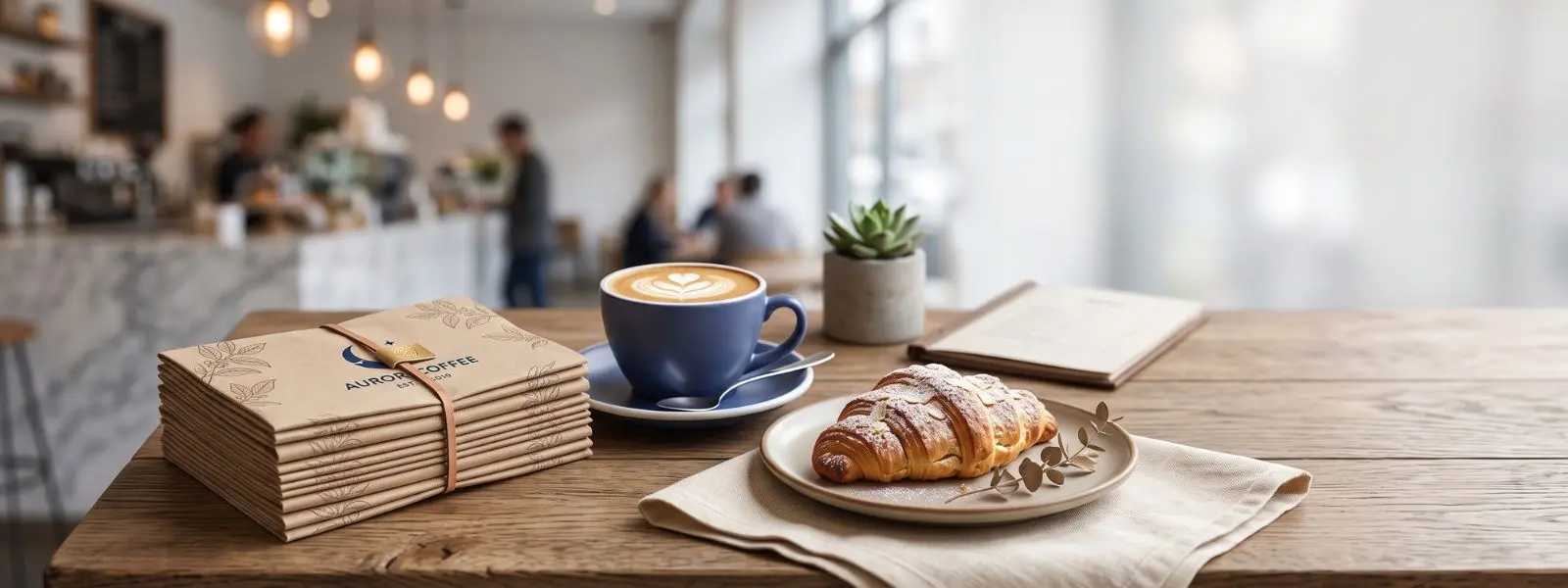
Think about how many times a guest touches your napkin during a single visit. They unfold it before the food arrives, wipe their hands, dab their mouth, fold it beside the plate, reach for it again with dessert. Now think about how many times they open your menu — once, maybe twice. The napkin is the most-handled object at the table, and in most restaurants it is also the least considered. That gap is exactly where custom napkins earn their keep.
A branded napkin is not table decoration. It is a repeated, intimate impression of your brand at the precise moment a guest is enjoying your food — and it costs a fraction of any other marketing you run. The restaurants that understand this treat the napkin as a designed surface, not a commodity. Here is how to do the same, without overthinking it.
Why the napkin is your most underrated brand touchpoint
Marketing usually chases attention. The napkin already has it. It is in the guest’s hands, in their eyeline, and in their photos, without any effort to grab notice. When a logo appears there — quietly, tastefully — it reads as confidence rather than advertising, the mark of a place that has thought about every detail. Guests register that care even when they do not consciously name it.
There is a practical dimension too. A branded napkin is arguably the cheapest advertising a restaurant can buy per impression: it reaches every single guest, reinforces the name they will recommend to a friend, and travels out the door with takeout orders. Unlike a discount or an ad, it does not interrupt the experience — it is the experience. Few surfaces in hospitality work this hard for so little.
What separates a premium napkin from a throwaway one
The difference a guest feels comes down to a few tangible things, and ply is the first. A one-ply napkin is thin and economical, fine for a quick-service counter but flimsy in the hand. Two-ply is the everyday standard — absorbent enough for real spills and condensation, substantial enough to feel intentional. Three-ply is where a napkin turns premium: thick, soft, and durable, the weight you notice in a fine-dining setting before you have read a word of the menu.
Beyond ply, the tactile finish carries the impression. A linen-texture emboss gives paper the look and feel of cloth at a paper price, while edge embossing (sometimes called a valance) frames the napkin and keeps it from unraveling. Absorbency matters more than it sounds — a napkin that fails at its actual job undoes any branding on it. And the print itself has to be clean: crisp edges, accurate color, and a logo that sits comfortably rather than shouting. A premium napkin is one where quality of paper, feel, and print all agree with the price on your menu.
Matching the napkin to the moment
Napkins are not one product but a small family, sized to the service. Choosing the right one is mostly common sense once you know the options:
- Cocktail and beverage napkins — small, for the bar and lounge, set under drinks and passed with appetizers. The classic canvas for a logo or a witty line.
- Luncheon napkins — mid-sized, the workhorse for casual meals and daytime service.
- Dinner napkins — larger and often heavier, for full meals, formal settings, and anywhere presentation leads.
- Dispenser napkins — built to feed cleanly from a dispenser in fast-casual and counter service.
Most restaurants carry two: a beverage napkin for the bar and a luncheon or dinner napkin for the table. A cohesive brand keeps the same logo and colors across both, so a guest moving from the bar to their table sees one identity, not two.
Designing a napkin that actually elevates the brand
The most common mistake is doing too much. A napkin has a small surface and a soft, absorbent one, so busy artwork and fine detail get lost. Restraint wins here more than almost anywhere in packaging: a single well-placed logo, or a monogram in a corner, reads far more expensive than an edge-to-edge design.
Keep the napkin honest to the rest of your brand — the same logo, the same colors, the same typography guests see on your signage and menu. Consistency is what turns a napkin from a nice touch into brand equity. On method, a flat printed logo is clean and cost-effective; foil stamping adds a metallic shine that suits upscale bars and special occasions; and embossing presses the mark into the paper for a tactile, understated luxury. Match the technique to your positioning rather than reaching for the flashiest option. One design note worth flagging: brand colors specified in Pantone can shift slightly when printed in CMYK on absorbent paper, so approve a proof if your color has to be exact.
Sustainability that fits the story
Guests increasingly notice what a restaurant throws away, and the napkin is a visible, high-volume item. Recycled-content and responsibly sourced napkins let the values on your wall show up on the table, and for many concepts that alignment is part of the brand rather than a compromise. Unbleached or natural-tone napkins can even reinforce a rustic, artisan identity while telling the eco story at a glance. The point is not to bolt sustainability on, but to let the napkin quietly carry a message the brand already stands for.
Getting it right
The practical path is short. Decide the ply and size against your service level — two-ply luncheon for most casual rooms, three-ply dinner where presentation leads, a beverage napkin for the bar. Pick a print method that matches your positioning, supply a clean vector logo, and approve a proof so color and placement land the way you intend. Confirm the minimum order quantity and lead time, and order the bar and table napkins together so the brand stays consistent across the room.
Handled this way, a napkin stops being an afterthought and starts doing what the best branding does — showing up everywhere, feeling effortless, and reminding every guest, in their own hands, exactly whose table they are sitting at.
Explore custom paper napkins, including cocktail napkins for the bar, and see the full range of custom paper for restaurants. For a coordinated look, pair napkins with your custom tissue and wrap.