
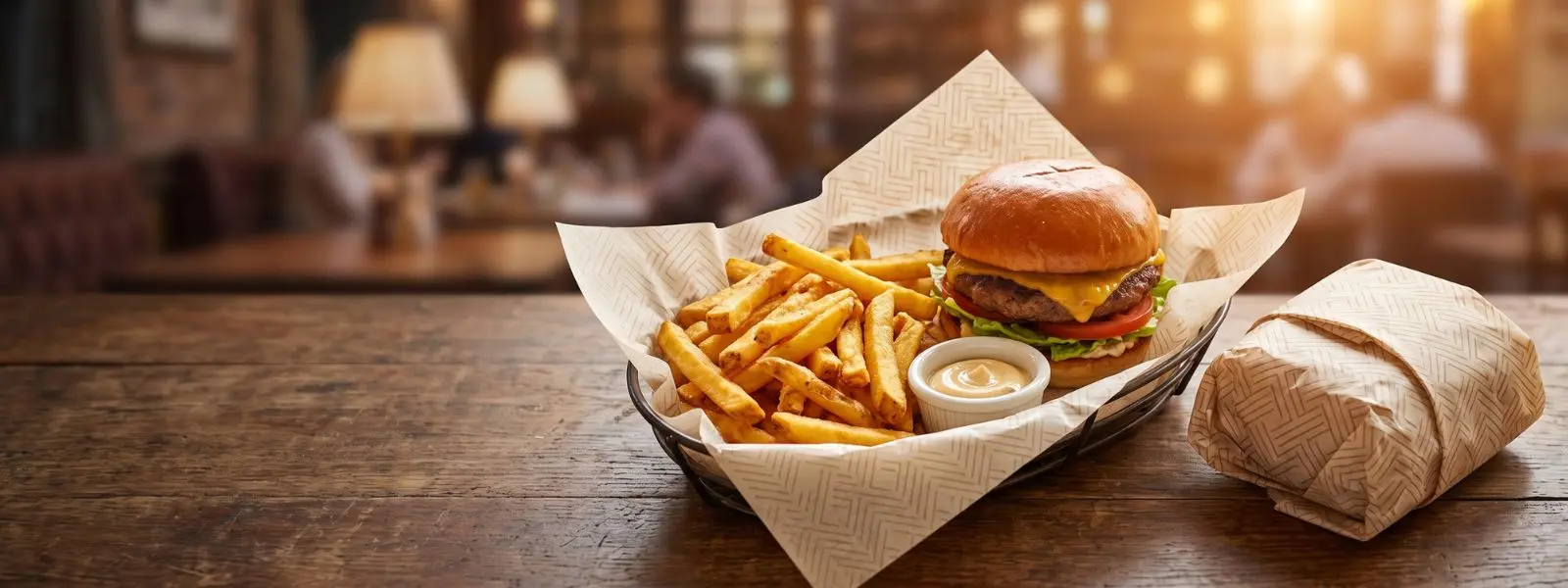
The Ultimate Restaurant Guide to Greaseproof Paper
Greaseproof paper is a restaurant workhorse — it wraps burgers, lines fry baskets, separates bakes, and carries a printed logo to the customer’s hands. But “greaseproof paper” is not one product. The grade, coating, weight, and format all change how a sheet performs against a specific dish, and choosing the wrong one shows up fast as grease bleed, a soggy wrap, or a liner that fails under a hot serving.
For most restaurants, the right greaseproof paper is decided by three things: the grease and heat level of the food, the weight (GSM) needed to contain it, and whether the paper is served cold, held hot, or reheated. Match those and the choice becomes straightforward.
Standard restaurant greaseproof paper runs roughly 35–45 gsm, with 50–60 gsm reserved for very oily or heavy-duty use. Coating options range from uncoated calendered stock to silicone, PE, and wax finishes — each suited to a different heat scenario. This guide walks through the types, how to match paper to your menu, coated versus uncoated, and which format to order, so you can specify greaseproof paper with confidence rather than guesswork. If you first want the basics of how the paper works, see what is greaseproof paper.
What Types of Greaseproof Paper Do Restaurants Use?
Restaurants use greaseproof paper in four main formats and several coating grades, each built for a different task at the pass. Knowing the menu of options is the first step to choosing well.
By Format:
- Pre-cut sheets — Square or rectangular wraps (12″ × 12″ and 15″ × 11″ are typical) for burgers, sandwiches, and single servings.
- Rolls — Cut-to-length on demand for variable item sizes and high-volume lines.
- Basket and tray liners — Printed sheets that both contain grease and lift presentation in baskets and on trays.
- Greaseproof bags — Practical takeaway packaging for fried and ready-to-go foods.
By Grade and Coating:
- Uncoated (calendered) greaseproof — Grease resistance built into dense fibre, breathable, recyclable; the everyday default.
- Silicone-coated — Non-stick and heat-stable, the grade to use when items go in the oven or air fryer.
- PE-coated — A strong oil and moisture barrier, but low heat tolerance, so not for hot-oven use.
- Wax-coated — Moisture and light-grease barrier for cold and room-temperature wrapping.
Which Greaseproof Paper Is Best for Your Menu?
The best greaseproof paper for a restaurant is the lightest grade that fully contains the target food’s grease and heat. Over-specifying wastes cost and stiffens the wrap; under-specifying leaks. Use the table below as a starting decision guide, then confirm GSM and coating with your supplier.
| Menu Item | Grade to Choose | Typical GSM | Why |
|---|---|---|---|
| Burgers, hot sandwiches | Uncoated greaseproof | 40–45 | Holds heat and grease, folds clean |
| Fries, fried chicken, oily snacks | Uncoated, heavier | 50–60 | High grease load needs more barrier |
| Fish and chips, saucy items | Uncoated / PE where cold | 45–60 | Contains oil and moisture |
| Oven-reheated or air-fried items | Silicone-coated | 35–45 | Heat-stable and non-stick |
| Pastries, delicate bakes | Light greaseproof / glassine | 30–40 | Gentle separation, no over-wrap |
| Cold sandwiches, deli counter | Uncoated / wax | 30–40 | Presentation and light barrier |
Understanding Kit Ratings: Weight is the second lever. As a rule, 35–45 gsm covers the majority of wrapping and lining, while foods that are very oily, hot, or held for a while call for 50–60 gsm. Grease resistance itself is graded by the Kit Rating (0–12 under TAPPI T559) — a higher number resists more aggressive oils, so specifying a target Kit value alongside GSM removes ambiguity from the order.
Coated vs Uncoated Greaseproof Paper — Which Should a Restaurant Choose?
Choose uncoated greaseproof for everyday wrapping and lining, and a coated grade only when heat or an extra moisture barrier demands it. The coating decision hinges almost entirely on temperature.
Uncoated calendered greaseproof gets its barrier from dense fibre rather than a surface layer, which keeps it breathable, recyclable, and clean to print. It handles the bulk of restaurant wrapping and lining without any coating at all. For most operations, this is the default that keeps stock simple and cost down.
Coated grades solve specific problems:
- Silicone coating is the one to reach for when items go into an oven or air fryer, because it is non-stick and heat-stable.
- PE (polyethylene) coating gives a stronger oil and moisture barrier for wet, saucy foods, but it does not tolerate high heat — so it belongs on cold or ambient service, not in a hot oven.
- Wax coating suits cold wrapping and interleaving.
Match the coating to how the food is served, and confirm the stated temperature limit before any heated use.
What Format Should You Order — Sheets, Rolls, or Basket Liners?
The right format depends on your item mix and service speed, not on the paper itself. Each format solves a different operational problem.
Pre-cut sheets suit stations that wrap a consistent item — a set burger or sandwich size — because staff grab and fold without measuring. Rolls win where item sizes vary or volume is high, letting the line tear exactly the length needed and cut waste. Basket and tray liners are the presentation play: a printed liner contains grease and carries branding in the same sheet, ideal for baskets, boards, and trays served to the table.
Kitchen Workflow Tip: Many restaurants run two formats — a wrapping sheet plus a printed basket liner — rather than forcing one format to do both jobs. Standard sheet sizes such as 12″ × 12″ and 15″ × 11″ cover single servings, while custom sizes fit oversized or signature items. Ordering around your actual service flow keeps the line fast.
How to Choose Custom Printed Greaseproof Paper
Custom printed greaseproof paper turns a functional wrap into brand exposure, provided the print is food-safe and the base paper is compliant. A branded sheet reaches the customer directly, so it earns its cost as low-friction marketing — but only when the fundamentals hold.
Confirm four things before ordering a printed run:
- Food-safe ink: The print sits on a food-contact surface, so the ink must be food-safe; plant-based inks are common for this reason.
- PFAS-free / fluorine-free: Following the FDA’s 2024 phase-out of PFAS grease-proofing agents and the January 2025 confirmation that related authorizations were no longer effective, new greaseproof paper for the U.S. market should be fluorine-free; ask for it in writing.
- FSC and food-grade stock: Verify the base paper is food-grade and, ideally, responsibly sourced.
- Size and format: Lock the sheet size, GSM, and coating to your menu before adding artwork.
A single printed sheet used across wraps and liners keeps the brand consistent from the pass to the table. For physical product options, see custom greaseproof paper, printed food basket liners, and our custom paper for restaurants page.