
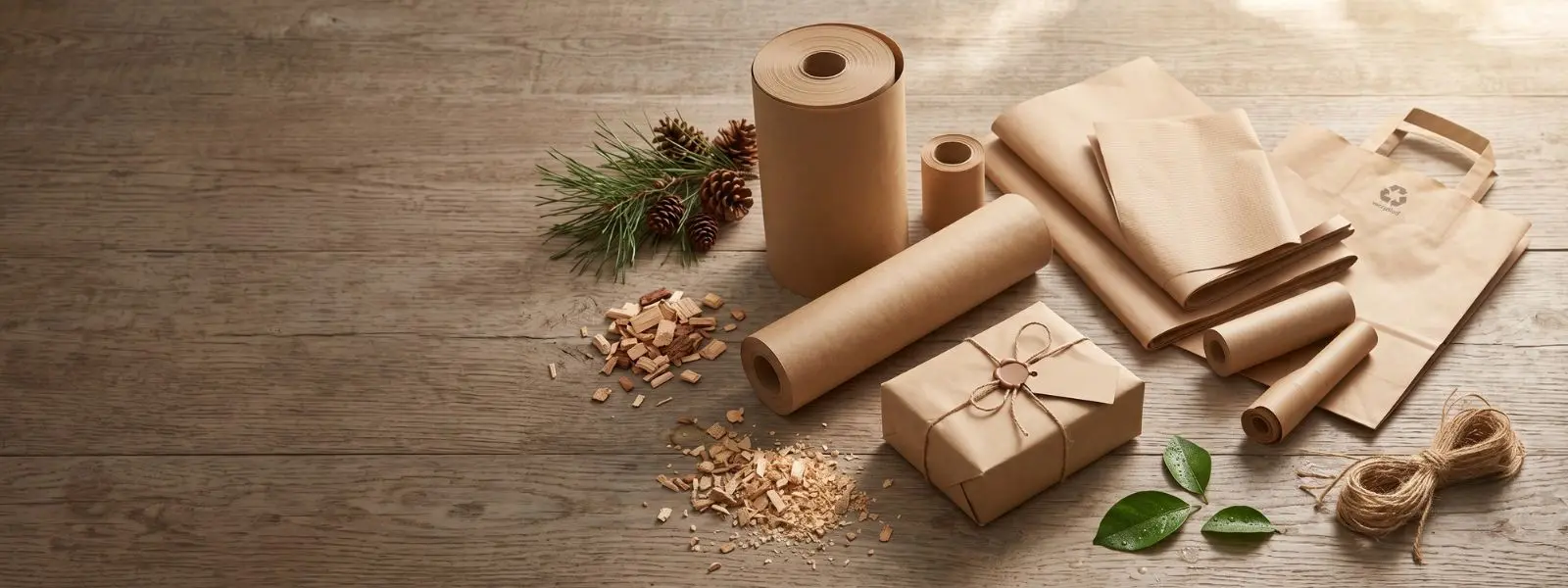
Kraft paper is the strong brown paper behind grocery bags, shipping wrap, corrugated boxes, and butcher paper. It is one of the most widely used papers in the world, valued for a rare combination: it is tough, low-cost, and genuinely sustainable. That strength is not an accident of thickness — it comes from the specific process used to turn wood into pulp.
Kraft paper is a strong, durable paper made from wood pulp using the kraft process, also called sulfate pulping, which preserves the long cellulose fibres that give the paper its high tear and burst strength. The name itself comes from the German word for “strength.”
Developed in the late 1800s, the kraft process cooks wood in a chemical solution that removes lignin while keeping the cellulose fibres long and intact — and long fibres are what make paper strong. Because bleaching shortens and weakens fibres, the toughest kraft paper is left in its natural brown state. This guide explains how kraft paper is made and why it is so strong, the main types you will encounter, its common uses, and how recyclable and sustainable it really is.
How Is Kraft Paper Made, and Why Is It So Strong?
Kraft paper is made by cooking wood chips in an alkaline chemical solution that dissolves lignin while preserving long cellulose fibres, which is exactly what gives the paper its strength. The process is the whole reason kraft outperforms ordinary paper.
In the kraft (sulfate) process, wood chips are cooked in a digester with “white liquor” — an alkaline mix of sodium hydroxide and sodium sulfide. This solution breaks down and dissolves lignin, the natural binder in wood, without badly damaging the cellulose fibres. Because those fibres stay long and strong, the resulting pulp produces paper with high tear resistance, burst strength, and stiffness. The process works on a wide range of wood — softwoods like pine give especially long fibres and extra strength — and can even incorporate hardwood, agricultural residues, and recovered paper.
One consequence explains kraft paper’s signature look: since bleaching weakens the fibre, mills make their strongest products in the natural, unbleached brown colour. That brown tone is not a style choice so much as a sign the paper has kept its full strength. The same chemistry also runs an efficient chemical-recovery loop, which is part of why kraft production is relatively resource-conscious.
What Are the Types of Kraft Paper?
Kraft paper comes in several types defined by three variables: whether it is bleached, whether it uses virgin or recycled fibre, and how it is finished or coated. Matching the type to the job is the key decision.
| Type | Description | Best for |
|---|---|---|
| Natural (unbleached) kraft | Brown, strongest, lowest cost | Bags, wrapping, boxes, eco branding |
| Bleached (white) kraft | Whitened surface, vivid print, slightly weaker | Premium retail, cosmetic, high-quality print |
| Virgin kraft | Fresh wood pulp, maximum strength | Heavy-duty sacks, shipping |
| Recycled kraft | Post-consumer fibre, eco, lower strength | Light packaging, void fill, cartons |
Beyond these core distinctions, the industry uses named board grades. Solid unbleached sulfate (SUS), sometimes called coated unbleached kraft, is a thin but stiff virgin-fibre substrate with a natural clay coating that takes print well while keeping the unbleached look. Solid bleached sulfate (SBS) is a clean white paperboard used for hygienic food, pharmaceutical, and luxury packaging. Coated recycled board (CRB) is a budget, recycled substrate for lighter uses like cereal boxes. Kraft is also produced in finishes such as machine-glazed (one glossy side for print), ribbed, and coated grades, and in weights ranging from lightweight wrap around 30–40 gsm up to heavy board. Natural, recycled, and unbleached grades sit at the sustainable end; bleached grades trade some environmental cost for a brighter surface.
What Is Kraft Paper Used For?
Kraft paper is used across packaging, shipping, retail, food service, and industry, thanks to its strength, printability, and low cost. Few materials cover as many jobs.
- Packaging and shipping — corrugated box liners and medium, mailer boxes, folding cartons, and protective wrap.
- Bags and sacks — grocery and shopping bags, plus heavy multiwall sacks for cement, flour, and animal feed.
- Wrapping and protection — gift and product wrap, void fill and cushioning, pallet interleaving, floor protection, and paint masking.
- Food service — when made food-grade, kraft becomes butcher paper, deli wrap, food bags, and tray liners.
- Retail and stationery — branded bags, envelopes, tags, and craft materials.
The natural brown finish carries a second benefit for businesses: it signals eco-friendliness at a glance, which is why so many brands choose kraft to express sustainability in their packaging. Its printability means that rustic look can still carry a full-colour logo. For the food-service side specifically — food-grade grades, wraps, and bags — see our guide to kraft paper uses for food packaging, and for meat wrapping, custom butcher paper is a food-grade kraft.
Is Kraft Paper Sustainable, Recyclable, and Biodegradable?
Yes — kraft paper is one of the most sustainable packaging materials available: it is made from a renewable resource, and it is recyclable, biodegradable, and often compostable. This is a core reason for its popularity beyond strength and cost.
Kraft paper starts from wood, a renewable resource, and responsibly produced grades are available FSC-certified to confirm sustainable sourcing. At end of life, uncoated kraft is widely recyclable and will biodegrade, and pure paper grades can compost. Natural and recycled kraft carry the lowest environmental footprint — recycled kraft avoids cutting fresh timber, while unbleached kraft skips the environmental cost of bleaching. The main caveat is coatings: a wax, PE, or laminate layer added for grease or moisture resistance can reduce recyclability and compostability, so a plain or plant-coated grade is the cleaner choice where end-of-life matters.
Put simply, kraft delivers real durability without the persistence problem of plastic. For businesses balancing performance against environmental goals, choosing natural or recycled kraft — and avoiding unnecessary coatings — keeps both strength and sustainability intact.
1 thought on “What Is Kraft Paper? How It’s Made, Types, and Sustainability”