
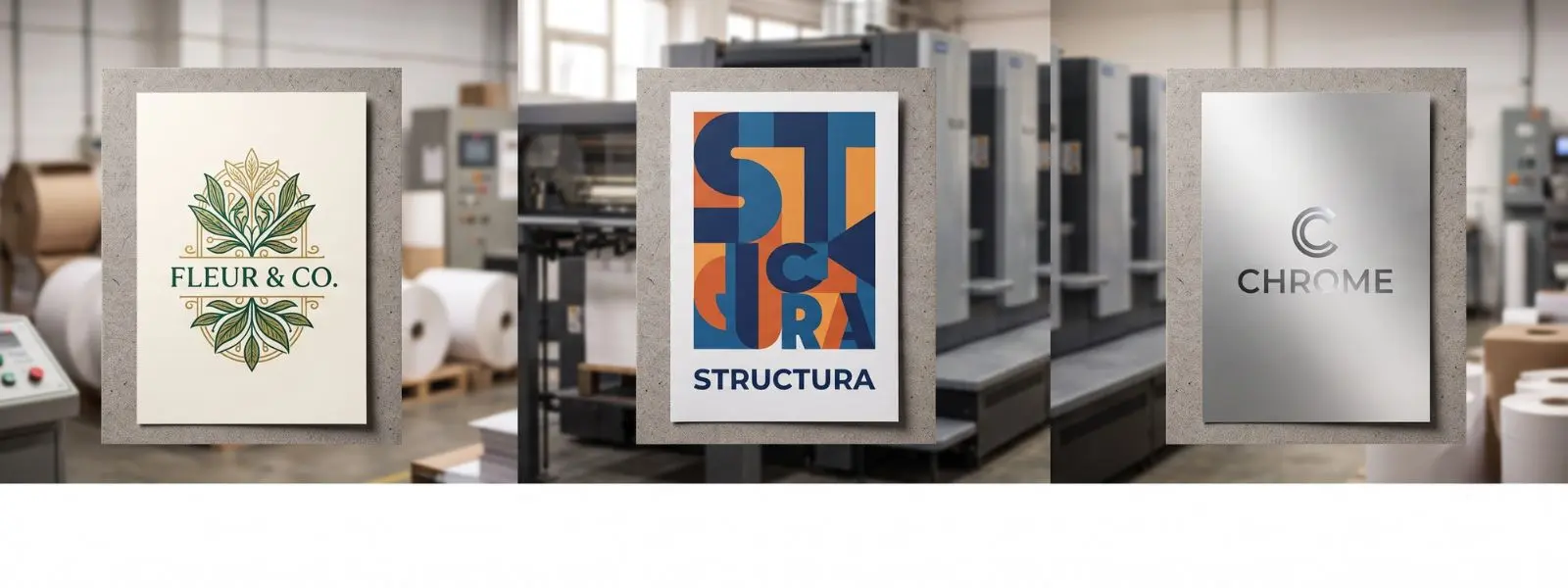
How your custom paper is printed decides three things that matter to your budget: what it costs per unit, how good it looks, and how fast you get it. Most buyers never think past the design — but the printing method behind it is why a short run of branded deli sheets is priced completely differently than a pallet of them. Three methods cover almost all custom paper printing: digital, flexographic (flexo), and offset. Each wins in a different situation, and choosing right can cut your cost or lift your quality without changing the artwork.
The single most useful rule up front: pick by run size first, quality target second. Get the run length right and the method usually chooses itself. This guide explains how the three methods work, what each is best at, and how to choose for your paper, volume, and budget.
The three methods at a glance
Each method applies ink differently, and that mechanical difference is the source of every cost and quality trade-off below.
Digital uses no printing plates — the design goes straight from file to press, like a very advanced office printer. No plates means no setup cost and instant changes. Flexo uses flexible relief plates on rotating cylinders that stamp ink directly onto the material, fed from a continuous roll. Think of it as high-speed stamping. Offset transfers ink from a metal plate to a rubber blanket and then onto the paper, which is what gives it the sharpest image quality.
The practical differences are structural, not always visible: how plates are made (or not), what substrates each handles, and the minimum run at which each becomes economical.
Digital printing: best for short runs and speed
Digital printing is the right choice for short runs, samples, fast turnaround, and any job needing variable data. Because it uses no plates, there is no setup cost to amortize, so a run of 100 sheets costs a sensible amount per unit instead of being crushed by tooling charges.
Its strengths are speed to market, low minimums, full-color output, and the ability to change the design between pieces (variable data, versioning, seasonal variants) with no penalty. The trade-off is at scale: with no plates to spread cost across, the per-unit price stays relatively flat as volume grows, so digital loses to flexo and offset on large runs. Digital handles most coated and uncoated papers and labels well, though very heavy board and some textured or film substrates can be limiting. For a first custom order, a sample run, or a short seasonal batch, digital is usually the smart, low-risk pick — often the method behind on-demand custom food paper samples.
Flexographic printing: best for high-volume packaging
Flexo is the workhorse of paper packaging, ideal for high volumes printed on rough or absorbent materials like kraft. Its soft, flexible plates conform to textured and porous surfaces — corrugated kraft, recycled brown paper, bags, food wraps, and films — that other methods struggle with, which is exactly why most branded kraft bags, food papers, and wraps are printed this way.
At volume, flexo is highly economical: once the plates are made (one per color), the per-unit cost on long, continuous roll runs drops well below digital. It runs fast, often combining printing, coating, and die-cutting inline, and typically uses water-based, low-VOC inks that suit food and eco-conscious packaging. The trade-offs are a plate setup cost that makes very short runs uneconomical, and slightly lower fine-detail capability than offset — flexo holds solid logos and brand colors well but is less suited to intricate, photographic artwork. For most food and retail paper produced in quantity, flexo is the default, which is why simple, bold designs (covered in designing your first custom food paper) print so cleanly and cheaply on it.
Offset printing: best for premium detail and large runs
Offset printing delivers the highest image quality and the lowest per-unit cost on large runs of smooth paper. If you need fine detail, photographic reproduction, or precise Pantone brand-color matching, offset is the benchmark.
Its strengths are the sharpest halftones, cleanest edges, the widest color gamut, accurate spot/Pantone colors, and specialty inks like metallics and varnishes — on smooth paperboard and sheets. Above roughly several thousand units, its per-impression cost is the lowest of the three, which is why retail folding cartons, premium sheets, and high-end printed pieces favor it. The trade-offs are real, though: high makeready cost (plates priced per color, plus color-matching and registration setup) makes short runs expensive, plate production adds lead time, and variable data is not possible since every sheet uses the same plates. Offset is the choice when quality and volume are both high and the substrate is smooth — less so for rough kraft or small runs.
Which printing method should you choose?
Choose by run size first, then substrate, then detail — in that order. The table turns the trade-offs into a fast decision.
| Factor | Digital | Flexo | Offset |
|---|---|---|---|
| Best run size | Short (low hundreds–~1,500) | High volume | Large (~5,000+) |
| Setup cost | None | Plate per color | Plate per color (highest) |
| Per-unit at volume | Higher | Lowest (rough stock) | Lowest (smooth stock) |
| Substrate strength | Coated/uncoated paper, labels | Rough, absorbent kraft, films | Smooth paperboard, sheets |
| Detail / photographic | Good | Solid logos, less fine detail | Highest, photographic |
| Variable data | Yes | No | No |
| Turnaround | Fastest | Fast at scale | Longest (plates) |
Read it as a sequence. Small run, sample, or variable design → digital. Large run on kraft, bags, or food paper → flexo. Very large run on smooth stock needing premium detail or exact Pantone → offset. For most custom food and kraft paper, that means flexo at volume and digital for short runs, with offset reserved for smooth, high-detail work.
A note on substrate and testing
Whatever the run size, the method has to match the material — ink has to anchor to the surface. Rough, absorbent kraft favors flexo; smooth, coated stock favors offset; and digital sits in between with some limits on heavy or textured substrates. Before committing to a large run, it is worth printing a small test lot on your actual paper to confirm color, adhesion, and finish, since the same design can look different across substrates and ink systems. And when the paper touches food, the ink and its compliance matter as much as the method — see food paper certifications explained and confirm food-safe inks regardless of how the paper is printed. To brief a print run, explore custom food paper and request a proof and sample before scaling.