
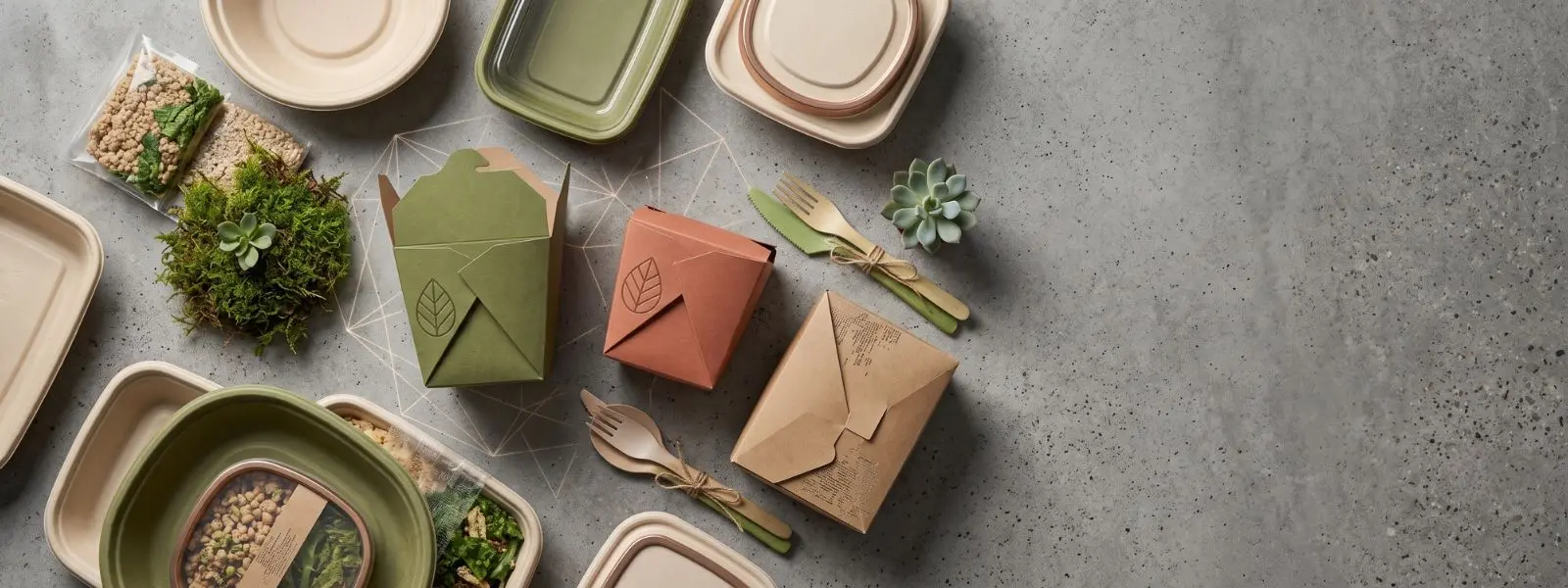
Packaging stopped being a back-office decision. In 2026, what your food comes wrapped in touches regulation, cost, brand perception, and customer trust all at once — and the pace of change has caught a lot of food brands flat-footed. The shift from voluntary sustainability gestures to mandatory compliance, combined with rising customer expectations, means the wrap that was fine two years ago may now be a liability. This is the state of paper packaging in 2026, and the trends every food brand should be tracking.
The through-line across all of them: sustainability and compliance are no longer optional extras — they are the baseline, and brands are now expected to deliver them with performance and proof. Here are the seven shifts that matter most this year.
1. PFAS-free has become the default, not a feature
The biggest change in 2026 is that PFAS-free food paper has gone from a premium selling point to the assumed baseline. PFAS “forever chemicals,” long used to make paper grease-resistant, are now the target of tightening regulation on both sides of the Atlantic.
In the U.S., a dozen or so states now restrict intentionally added PFAS in food packaging, and the categories covered differ state to state — so clearing one state’s rule does not automatically clear another’s. Maine’s broad plant-fiber packaging rule and further state limits are landing through 2026, and in the EU, the Packaging and Packaging Waste Regulation begins limiting PFAS in food-contact packaging from August 12, 2026. For a food brand, this is now risk management as much as values: if your purchasing team cannot name the coating on your current stock, that is a gap to close. Confirm every grease-resistant paper you use is PFAS-free, and build it into your default spec — the guide to switching to eco-friendly food paper walks through how.
2. The plastic-to-paper shift is accelerating
Fiber-based packaging is rapidly replacing plastic across food service, driven by plastic bans, consumer preference, and real performance gains. Paper is no longer the compromise choice — it is increasingly the default.
Molded fiber containers, paper bowls and takeaway boxes, and paper-based flexible packaging are expanding fastest in categories like hot drinks, confectionery, and dairy. What changed is capability: fiber-based packaging can now deliver reliable product protection and remain valuable at end of life, so brands no longer sacrifice much to switch. For a food brand, the takeaway is that paper alternatives now exist for far more of the menu than they did a few years ago, and adopting them early aligns with both regulation and the renewable, recyclable materials customers increasingly favor. The paper-versus-plastic case for retail is covered in kraft paper bags vs plastic bags.
3. Sustainability and performance are now expected together
The defining tension of 2026 is that brands can no longer choose between sustainable and functional — customers and regulators expect both. A compostable wrap that soaks through, or a recyclable sheet that fails against hot grease, is no longer acceptable.
This is driving real barrier innovation: PFAS-free grease-resistant coatings, water-based and bio-based options, and re-engineered paper structures that hold up against moisture and oil without plastic or forever chemicals. For a food brand, the practical implication is to stop treating “eco” and “performance” as a trade-off and instead demand both in your spec — and to test replacements on your actual food before switching, since barrier performance varies by product, temperature, and contact time. The era of accepting a weaker eco option “because it’s greener” is ending; the market now expects sustainable packaging that simply works.
4. Proof is replacing vague eco claims
In 2026, buyers and regulators stopped taking “eco-friendly” at face value. Vague sustainability language is being challenged, and the expectation now is a specific certification or a named coating rather than a green leaf on the label.
Recyclability claims in particular are under scrutiny: “recyclable” only helps if the material is actually accepted locally and the design does not make it hard to process. The same goes for “compostable” and “biodegradable” without certification behind them. For a food brand, this means backing every claim with proof — a BPI or OK Compost certification, an FSC mark, a stated PFAS-free test, or the specific coating name — and matching claims to what customers can actually do with the packaging. Getting this wrong risks both regulatory exposure and the customer trust that vague claims were meant to build. The food paper certifications guide covers what each proof point actually means.
5. Smart and connected packaging is going mainstream
Connected packaging — led by QR codes and smart labels — is turning the wrapper into a communication channel. What began as a novelty is now a practical tool for trust, compliance, and marketing.
Scannable QR codes on packaging now link customers to ingredients, allergens, sourcing information, promotions, and feedback forms, adding traceability and engagement without changing the food itself. In cold-chain and freshness-sensitive categories, smart labels that monitor temperature, time, and humidity are improving food safety and transparency. For most food brands, the accessible version of this trend is simple: a QR code on your wrap or bag that carries your story, menu, loyalty program, or sourcing transparency — a low-cost way to connect a physical package to a digital relationship. It is branding and utility in one small addition.
6. Eco-luxury: natural looks now signal premium
A striking aesthetic shift in 2026 is that unbleached, textured, and visibly recycled materials now read as high quality rather than cheap. The “eco-luxury” look has flipped the old assumption that premium meant high-gloss.
Brands are moving toward uncoated papers that showcase raw fibers, kraft tones, and tactile texture — the rough grain of recycled paper serving as physical proof of a sustainability claim. Restrained, tonal branding on natural stock reads as more considered and premium than loud, glossy packaging. For a food brand, this is good news: the most sustainable materials are now also among the most on-trend, so choosing unbleached kraft or recycled stock supports both your eco positioning and a premium look. Natural is the new luxury, and it happens to be the responsible choice too.
7. Custom branding is now a competitive baseline
Finally, branded packaging has crossed from nice-to-have to expected. In 2026, a plain, unbranded wrap increasingly signals a business that has not updated its packaging strategy in years — while competitors turn every order into a branded impression.
With low minimums and short digital runs now widely available, custom branding is accessible to even small cafés, bakeries, and food trucks, so the barrier that once justified plain stock has largely fallen. For a food brand, the implication is that branded paper is no longer where you stand out — it is where you keep pace, with standing out coming from how well and how consistently you do it. Building a coherent, branded packaging system across every touchpoint is the play, as laid out in how to brand your food business with paper packaging.
What it all means for your food brand
The 2026 trends point one direction: packaging is now a strategic decision that blends compliance, sustainability, proof, and brand. The practical checklist is short — make PFAS-free your default, favor fiber-based options that perform, back every eco claim with certification, consider a QR code, lean into natural materials, and brand consistently. Brands that treat these as one connected strategy rather than separate boxes to tick will be the ones customers trust and regulators clear. Explore compliant, brandable options in custom food paper and request certifications and a proof before your next run.