
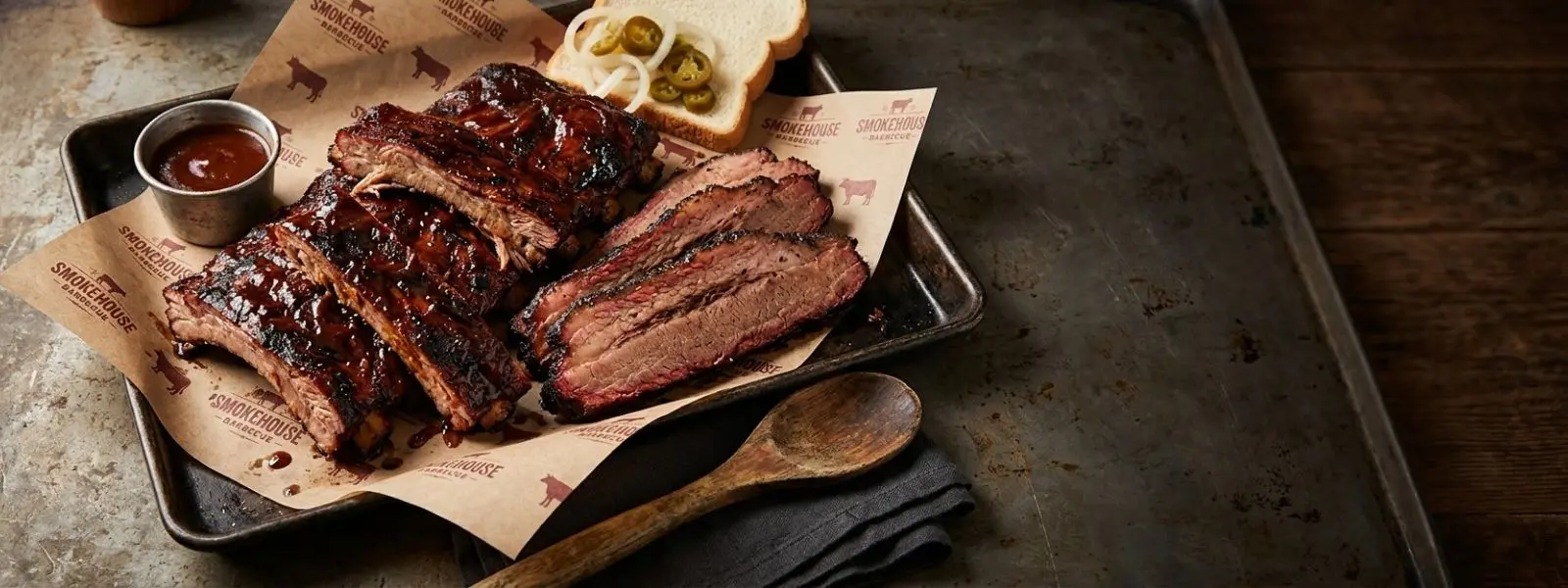
A BBQ operation runs on paper from the pit to the parking lot. The brisket gets wrapped, the tray gets lined, the pulled-pork sandwich gets folded, the ribs go out in a boat, and the whole messy, glorious plate gets handed over with a stack of napkins. Get that full paper lineup right and food stays intact, the line moves fast, and your brand rides out on every order. Get it piecemeal and you fight soggy trays, grease bleed, and a generic presentation that undersells the smoke.
This is a setup guide for the whole paper program a BBQ restaurant needs — not just the butcher paper. (For the deep dive on the cook-wrap itself, see custom butcher paper for BBQ restaurants.) Because BBQ food is saucy, greasy, and heavy, one requirement runs through every item below: real grease resistance. We will walk the operation station by station, then cover branding, food safety, and ordering the set.
Back of house: the pit and prep
The paper program starts before service, at the smoker and the prep table. This is where butcher paper does its most famous job — wrapping brisket and ribs through the stall to protect the bark — using unbleached, unwaxed, food-grade peach paper. The full detail on that cook-wrap, from breathability to weight, lives in the butcher paper guide; the short version is that it must be plain and food-grade, never waxed or coated.
Two other back-of-house papers earn their keep here. Patty papers separate ground portions and burger patties so they release cleanly, and freezer paper — with its poly-lined moisture barrier — handles portioning and storing meat and trim without freezer burn. Neither is glamorous, but both keep the prep line efficient and the product in good shape before it ever hits the pit.
The serving line: trays, baskets, and boats
This is where most of a BBQ joint’s paper volume lives, and where grease resistance matters most. Deli paper — also called food sheets or basket liners — lines every tray, wire basket, and food boat, catching sauce and grease so the vessel underneath stays clean and the food looks fresh. Because BBQ runs wet and oily, these sheets need a genuine grease-resistant treatment (typically dry-wax) that holds up under saucy ribs and pulled pork without sogging through or tearing.
Size the liner to the vessel: most baskets and boats fall in the 8-to-20-inch range, and a sheet that is too small leaves the sides exposed while one too large folds into a mess. This is also where BBQ gets its signature look — checkered, gingham, and newsprint prints give trays that classic pit-stop character, and the same sheets can carry your logo instead. Precut, interfolded sheets keep a busy line moving. Explore deli paper and food sheets and greaseproof sheets for this role.
Handhelds: wrapping sandwiches and to-go
Anything a customer eats with their hands needs a wrap that contains grease and holds together. Sandwich and burger wraps — kraft or greaseproof sheets, usually 10 to 12 inches — fold cleanly over a pulled-pork sandwich or a burger and keep sauce off hands and packaging. Many of these sheets are microwave- and oven-safe to around 375°F, which matters for reheating and for holding food hot on the pass.
For the to-go side, the same grease-resistant sheets wrap sandwiches for the bag, while heavier items and rib portions travel in lined boats or containers. The goal is simple: nothing should soak through or fall apart between the counter and the car. Matching wrap weight to how saucy the item is — heavier and more grease-resistant for the wettest foods — is what prevents the classic takeout failure of a bag with a grease stain spreading across the bottom.
Front of house and takeout
BBQ is messy by design, so the front-of-house paper has to keep up. Napkins are not an afterthought here — a rib plate needs heavier, more absorbent two- or three-ply napkins, and plenty of them, so it is worth speccing up rather than running thin dinner napkins that dissolve. Branded napkins also carry the logo across the table, as covered in custom paper napkins.
Takeout rounds out the lineup: sturdy paper carry bags sized for boxes and boats, and cups for drinks. Because takeout orders travel and get photographed, the bag and wrap are prime branding surfaces. Keeping these consistent with your in-house paper is what makes a to-go order feel like the same restaurant as the dine-in tray.
Branding the whole lineup
The payoff of a full paper setup is that every piece can carry the same brand — from the butcher paper lining the serving tray to the deli sheets, napkins, and takeout bags. When your logo and colors appear consistently across the lineup, customers remember you, and a plate of BBQ becomes a branded impression rather than a generic serving.
Keep the cook-wrap plain where it touches meat at temperature, and put branding on the serving and takeout paper instead — the tray liners, sandwich wraps, napkins, and bags a customer actually sees. Use food-safe inks on any food-contact surface, and keep one look across the set so the pit, the line, and the takeout counter all read as one restaurant. A cohesive lineup turns your highest-volume disposable into your most-seen marketing.
Food safety and sustainability
Every paper that touches BBQ should be food-grade and, in today’s market, PFAS-free. Grease-proofing was historically a common use of PFAS “forever chemicals,” but following the FDA’s 2024–25 phase-out, grease-resistant food paper for the U.S. should now achieve its barrier without them — so confirm your deli sheets, wraps, and liners are fluorine-free as well as food-grade and grease-resistant. For the underlying standard, see what is food grade paper.
Sustainability fits naturally with the BBQ aesthetic: unbleached kraft and natural-tone sheets reinforce a rustic, authentic look while supporting recyclable or compostable disposal. Choosing food-grade, PFAS-free, and where possible recycled or compostable paper covers both safety and the eco expectations customers increasingly bring to the table.
Ordering the full setup
Order the lineup as a set rather than piece by piece, so branding stays consistent and sizes match your equipment. Work through the operation: butcher paper for the pit, deli sheets and basket liners sized to your trays and baskets, sandwich and burger wraps for handhelds, heavy napkins, and takeout bags. Confirm each is food-grade, grease-resistant, and PFAS-free, lock your branding across the serving and takeout pieces, and approve a proof before the run.
Start with the custom food paper range and the butcher paper for BBQ guide, then coordinate deli sheets, greaseproof wraps, napkins, and paper bags. Request a food-safe proof before your run.